More than 15 per cent of the Nicaraguan population suffers from some form of disability. While the causes vary, the principal reasons include deficiencies in perinatal care as well as limited medical resources for pre- and post-natal care. The impact on school-age children is often devastating, with either a shortage, or no availability, of either education or therapeutic options that would enable them to integrate into society and be self-sufficient.
While advocating for and institutionalizing inclusive education were essential elements for success, such success could only be possible if the country’s educational professionals were empowered with the knowledge and resources to effectively meet the specials needs of disabled students.
In 2020, the Ministry of Education, the National Autonomous University of Nicaragua and UNICEF, with the financial support of the India-UN Fund, designed the country’s first master’s degree programme in disability, with emphasis on inclusive education. The programme consists of three modules in which participants will have the opportunity to acquire tools relating to specialization in research, implementation of inclusive methodologies, the use of neuroscience to create diverse environments, and the design of curricula that consider the inclusion of children with disabilities in the school system.
“This master’s degree is the result of the strategic alliance between academia, institutions and organizations to create innovative solutions to the social challenges that we face in the country and will help us to have more inclusive teachers and schools.”
Mr. Luis Lobato, Vice-Rector General of the University of Nicaragua.
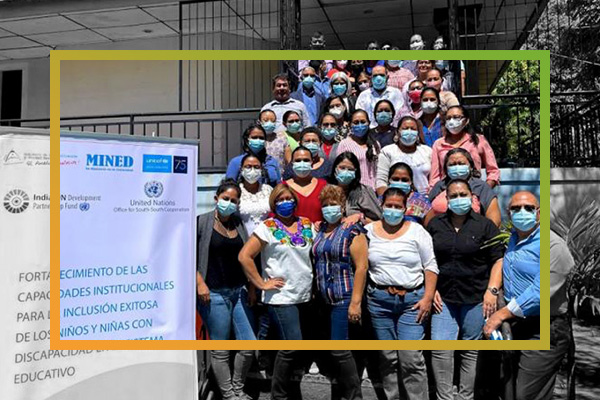
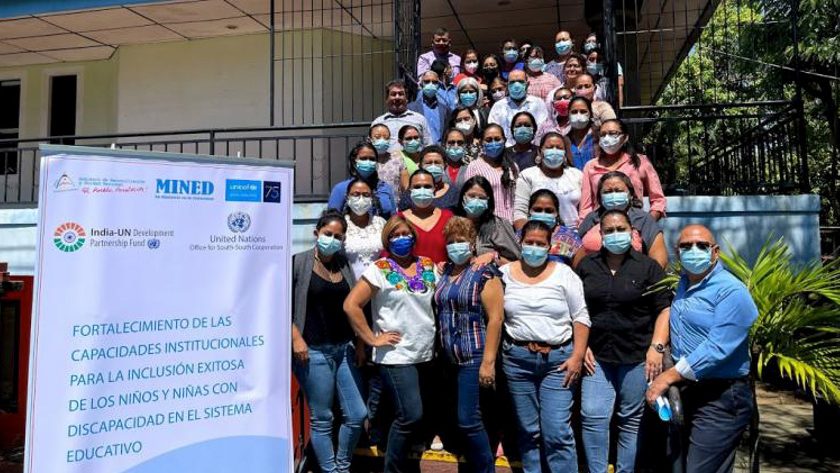
Now in the first cohort of the two-year programme, 37 teachers, school directors and pedagogical advisers from 15 schools
are participating and will acquire tools to apply the inclusive educational model, which recognizes the different needs of each child. The India-UN Fund is also supporting improvements in infrastructure, which will serve as a model for inclusion across the country.
“Achieving an inclusive school system requires teachers who are prepared and able to apply the inclusive and child-centred educational model, which recognizes the different needs of each child. Contributing to the preparation of teachers is a key objective, which is considered one of the factors with the greatest influence on the development of more inclusive schools and communities and that improves the results of educational centres.”
Mr. Antero Pina, Representative of UNICEF Nicaragua.
“Disability represents one of the main factors of exclusion to education. That is why the Ministry of Education is working every day to implement actions that promote participation and overcomebarrierstolearning.”
Ms.NoraCuadra, Directorofthe Planning Directorate of the Ministry of Education.