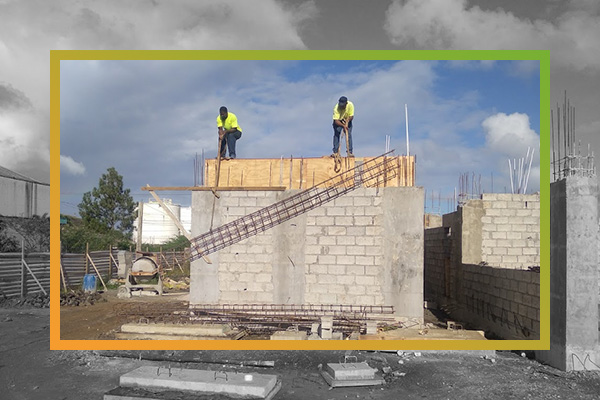
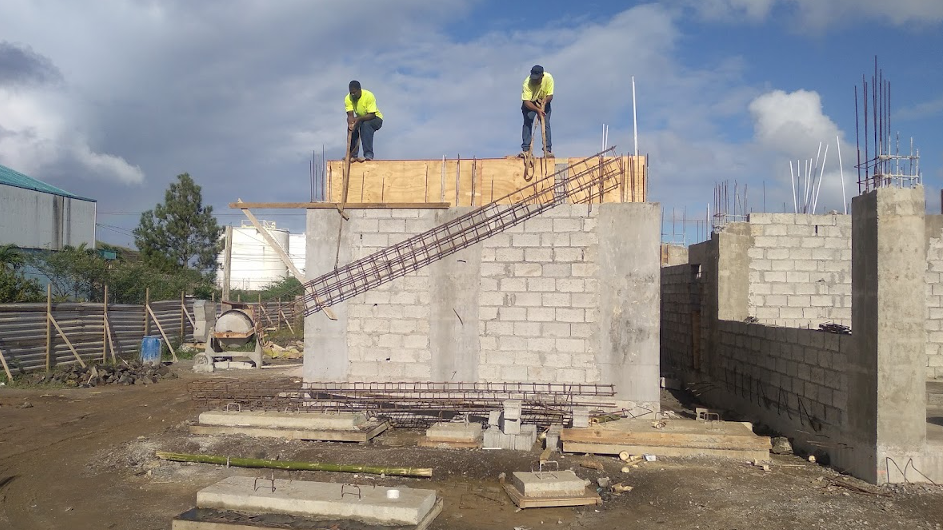
Youth unemployment in Saint Lucia, an island country in the eastern Caribbean, is staggeringly high, with over one-third of youth aged 15-29 without jobs and actively seeking employment. Equipping marginalized youth with practical skills will contribute to reducing unemployment significantly, as well as generate a more skilled workforce to support economic growth.
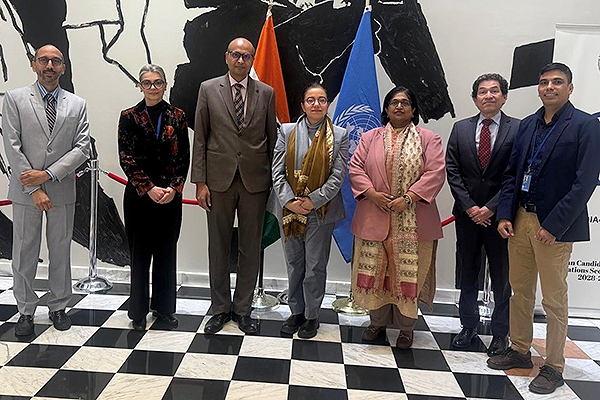
The project “Upgrading Saint Lucia’s capacity to provide impactful vocational training for marginalized youth”, financed by the India-UN Development Partnership Fund through the United Nations Office for South-South Cooperation (UNOSSC), is providing funds for the construction of a new facility for training youth. The project aims to increase opportunities for marginalized youth to participate in vocational training programmes.
.
The construction of the facility, managed by the International Labour Organization (ILO) Decent Work Team and Office for the Caribbean, is expected to be completed and operational in 2023
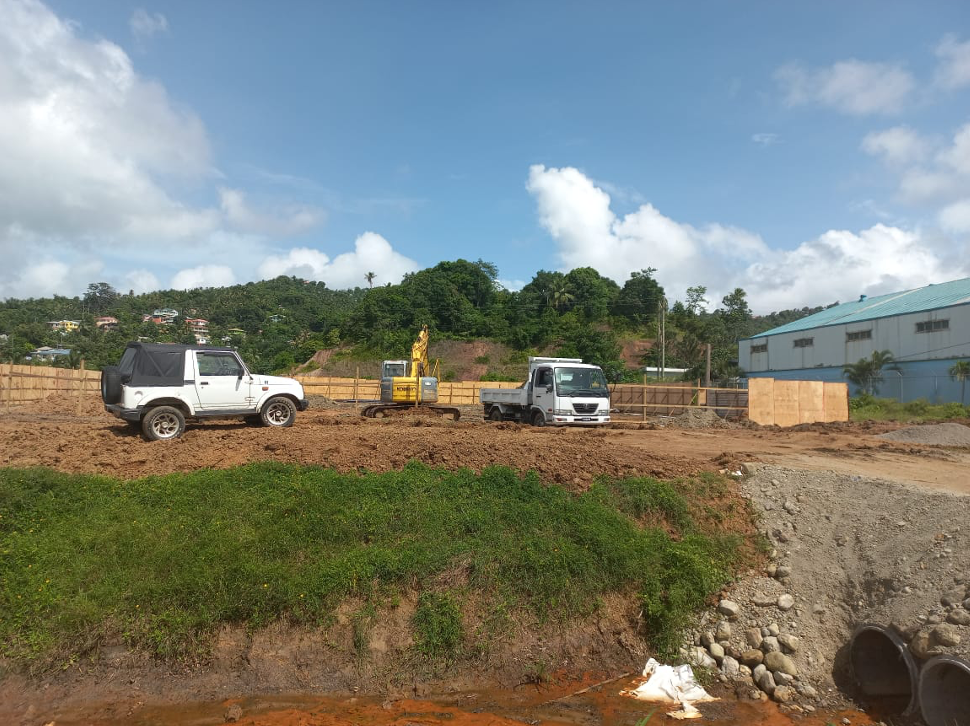
Located in the Cul de Sac district of Castries, the training facility will host a new state-of-the-art hospitality and catering block for the vocational curriculum to support local vulnerable youth. The facility will be managed by the local NGO Center for Adolescent Renewal and Education (C.A.R.E.), in collaboration with the Ministry of Education.
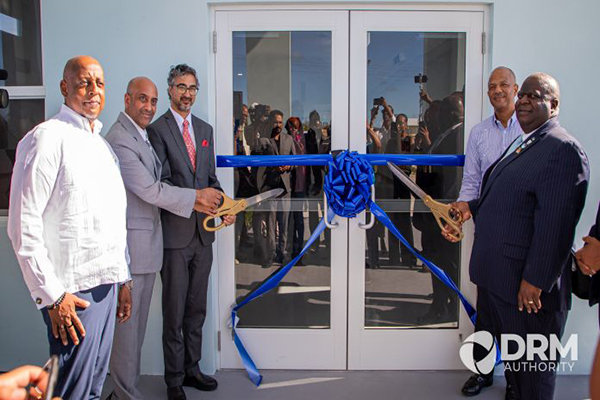
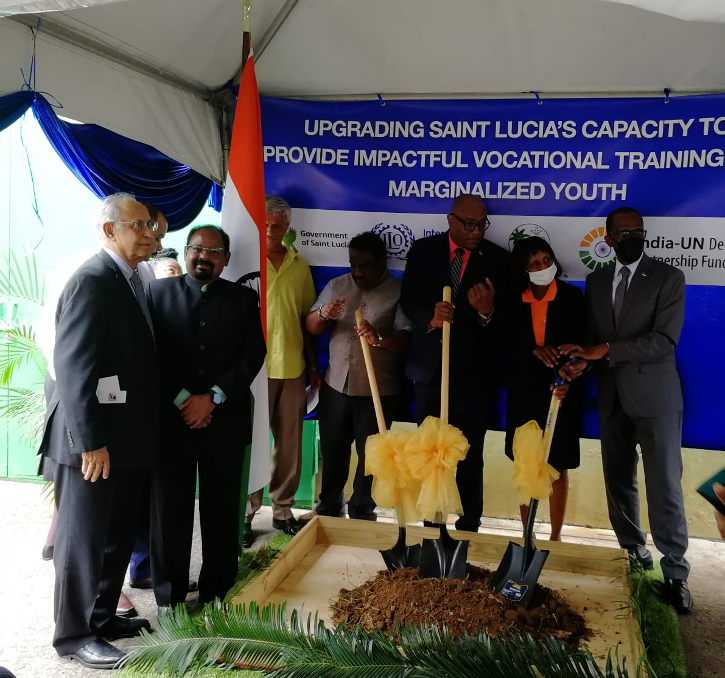
A sod-turning and site tour was held in July 2022 to mark the beginning of the project construction, attended by high-level officials including the Prime Minister and Minister of Finance, Honorable Philip Joseph Pierre, key officials from the Government of India and ILO, in addition to representatives from C.A.R.E.
At the event, the Honorable Prime Minister stated, “My administration is committed to providing more opportunities for our youth to create sustainable livelihoods and to become global citizens. He also commended C.A.R.E for continuing to support St. Lucia’s marginalized youth in vocational development.
“We are very pleased that this particular project funded by the Indian government is coming to fruition… especially in these harsh economic times that the Indian government was able to provide the financial backing for this particular project. This hospitality and catering block will obviously serve to enhance our tourism.”
? Deputy Permanent Secretary of the Ministry of Education, Innovation, Science, Technology and Vocational Training, Kendall Khodra, expressed his satisfaction that the project was moving forward.
“A project that has been long in the works is now coming into fruition.” This facility will amalgamate the C.A.R.E facilities in one central location with a major impact on vocational training opportunities. “Look out for what we can do for young people and the older ones as well because the intention is that we will be able to provide opportunities for those parents and others in the community who have not been able to receive skilled training, technical vocational training, so they too can benefit from our facilities.”
? The Executive Director of C.A.R.E., Karlene Mason, described the project as a milestone initiative for the organization.
Capacity-building and knowledge-sharing activities
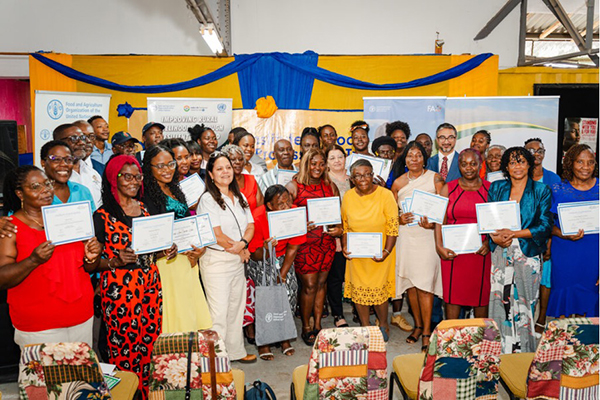
As part of the project, a “training of trainers” was organized in 2021 to strengthen and upgrade local capacity by providing entrepreneurship education to the staff of the main project partners, the Ministry of Education of the Government of Saint Lucia and C.A.R.E. This training served to support youth-led enterprise development and to facilitate the transition to productive self-employment at the end of the educational path.
Given that ILO was, in parallel, supporting national stakeholders in Jamaica on a similar project (namely, the Jamaica Business Development Cooperation), a joint learning activity enabled members from both countries to simultaneously attend the training activities.
The Master trainer, Ms. Sibongile Sibanda, a South African national and lead practitioner, and team, led the development, implementation, and teaching of the ILO SIYB (Start and Improve your Business) training package. This package, in use worldwide over three decades, provides trainers with insights about entrepreneurship education and hands-on teaching material, used to conduct capacity-building activities. Responding to national stakeholders’ requests, the focus of the training was on how to adapt the SIYB programme to the local context, and how to effectively maintain students motivation.
The entrepreneurship curricula proposed were tailored to trainers from middle-income developing countries of the Global South, confronted with similar challenges in terms of business ecosystems and institutional capacities to support micro-, small and medium-sized enterprises (MSMEs). Direct engagement with educational and business development institutions was welcomed by all parties as it fostered productive exchanges based on their different final customers (students or entrepreneurs starting or expanding their businesses).
The majority of the 24 participants in the capacity-building activities were teachers from vocational and secondary education institutions in Saint Lucia. In addition, three teachers employed by the Saint Lucia NGO C.A.R.E and three staff members from the Jamaica Business Development Corporation also participated.
The activity was implemented in two phases. A 10-day virtual training session between July 12 – and 23, 2021, was followed by a pilot rollout of the training package required to obtain formal certification as SYOB trainers.
The rollout started in September 2021 with the beginning of the new school year. These sessions benefitted from attendance, review, and guidance on the part of the Master Trainer and discussions in virtual networking spaces (telephone and email-based messaging groups), given the limitations in travel caused by the COVID-19 pandemic.
In the context of South-South cooperation, a virtual community of practice was established to carry the learning past the conclusion of the training sessions; and become the basis for future communications, enabling horizontal exchanges of knowledge, experiences, and practical advice between countries, institutions, and the highly-engaged community of trainees.
https://data.worldbank.org/indicator/SL.UEM.1524.ZS & https://stats.gov.lc/subjects/society/labour-force/youth-unemployment-by-age-and-sex-quarterly-2010-to-2022-q2/