
- All Publications
- Publications
- Good Practices in SSTrC Series
- South-South Ideas Series
- South-South in Action Series
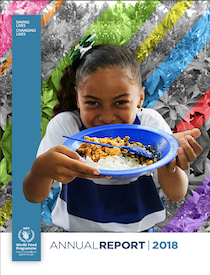
The WFP CoE continuously supports 30 countries in developing capacity to achieve Zero Hunger. Depending on the national contexts and demands, some countries require even closer technical assistance and remote support. In 2018, 17 countries (Benin, Burkina Faso, Burundi, Cambodia, Côte d’Ivoire, The Gambia, Guinea-Bissau, Lao, Liberia, Mozambique, Nepal, Kenya,...
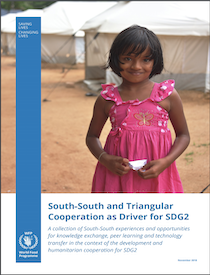
South-South & Triangular Cooperation is critical to access and mobilize the expertise, technologies and financial resources that already exist in developing countries. In order to reach the remaining 821 million people affected by chronic food deprivation worldwide the knowledge and development solutions from the Global South are indispensable. WFP has...
FOREWORD This report is published at a time when South-South and triangular cooperation (SSTC) and sustainable urban development are increasingly recognized as important means for implementing the Paris Agreement (UNFCCC 2015) and the 2030 Agenda for Sustainable Development with its 17 SDGs (UN 2015). The adoption of the Paris Agreement...
EXECUTIVE SUMMARY The scale of the challenges associated with sustainable development and climate change are global in nature. 2015 was a landmark year for charting a new era of sustainable development with the world embracing the 2030 Agenda for Sustainable Development (2030 Agenda) with its 17 Sustainable Development Goals (SDGs)...
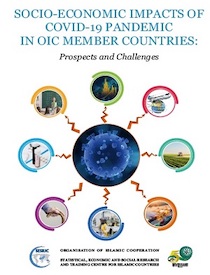
According to the SESRIC COVID-19 Pandemic Database, more than 879 thousand confirmed cases and more than 22 thousand fatal cases have been reported in 56 OIC member countries as of 2 June 2020. The COVID-19 pandemic disrupted normal economic activity and daily life across the world. However, early evidence indicates...
Restarting tourism responsibly requires that future operations be guided by a science-based approach in order to support governments, business, and local communities to understand the trade-offs of decision-making processes that aim to align hygiene and health protocols with sustainability criteria. The Global Tourism Plastics Initiative, launched in January 2020 to...
