With sustained winds of 230km/h (142 miles/hour), Cyclone Gita bashed into the islands that comprise the Polynesian kingdom of Tonga on 12 February 2018, leaving behind a swath of injury and destruction by the time it moved out to sea six hours later. The country recorded more than 400 injuries (out of a population of 106,00 people) and the damage or destruction of more than 2300 homes. Miraculously, only two people died.
Even for a country well-used to annual cyclones, it was the most power cyclone in 60 years and the results for the country were devastating.
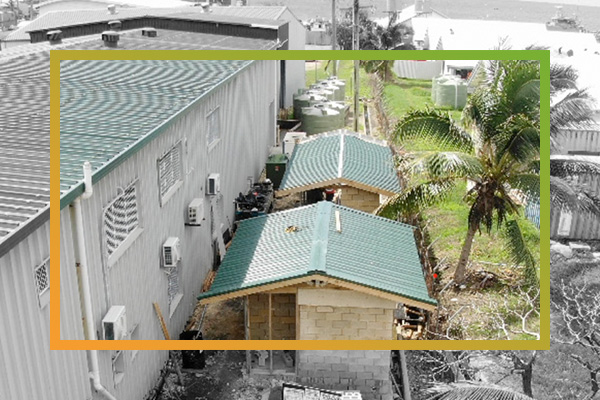
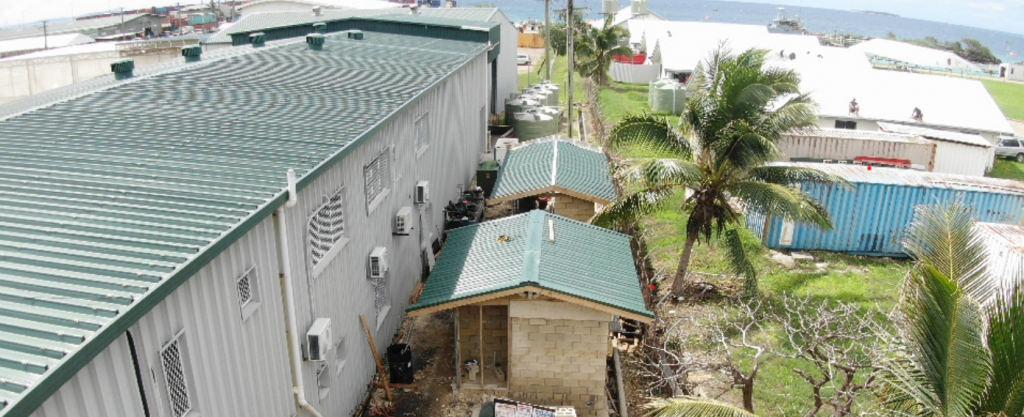
Among those structures most seriously damaged by Cyclone Gita were the country’s Food Processing and Export Building and the Fumigation Facility of the Ministry of Agriculture, Fisheries and Forests (MAFF); both were rendered inoperable. With agriculture Tonga’s primary source of employment, food, and foreign exchange earnings, it was essential to get them back up and running as quickly as possible.
In early 2020, UNDP and MAFF began working on the reconstruction and upgrading of the facilities. With financial support from the India-UN Development Partnership Fund’s through its Commonwealth window, the organizations conceptualized prepared a detailed plan that included improved energy and resource efficiency, greater processing capacity and resilient construction techniques designed to withstand future natural disasters. The project was an integral component in the country’s recovery efforts and re-establish core government functions. By the end of 2021, work was on track to complete the construction by March of 2022.
On 15 January 2022, a month shy of Gita’s four-year anniversary, aerial footage of the nearby Hunga Volcano eruption captivated the world as Tonga disappeared beneath the massive plume of an Atmospheric Pulse, setting record-breaking winds that reached into space and booms that were heard in Alaska, more than 6000 miles away. The waves of the resulting tsunami damaged the underwater fibre optic cables cutting off the communications via both phone and internet. It was the volcano’s most powerful eruption in 100 years.
Despite all the odds, as the volcanic ash and smoke dispelled and Tonga began to re-emerge, the buildings had done what the architects had set out to do: they had withstood another natural disaster sufficiently enough for minor repairs and the resumption of their purpose, to export Tonga’s produce to the world.
The results have been quantifiable. According to MAFF, there has been a steady and significant increased in Tonga’s exports since the facilities were both restored and upgraded. Exports of root crops – such as cassava, yams, taro, and giant taro – have grown from a total of 5,514.8 metric tonnes (MT) in 2019 to to 9,679.7MT in 2021 (a 76% increase). Kava exports have increased from 128.6MT in 2019 to 367.2 MT in 2021 (a 186% increase). Watermelon exports have also increased, from 166.3 MT in 2019) to 490.5 MT in 2021 (a 195% increase).
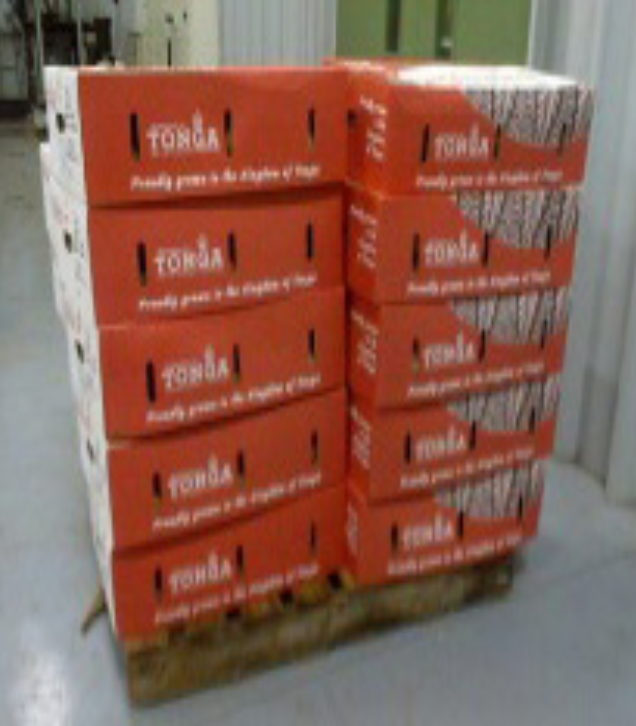
“I believe more and more farmers and exporters are, today, able to utilize the pack house facility for preparation and packing of their produce (cassava, yam, watermelon, taro, and Kava) to be ready for the final inspection by the Quarantine Officers in the same pack house before loading into frozen containers for export to New Zealand, Australia, USA, and other Pacific Island countries,”
says Metuisela Falesiva, Deputy CEO of Tonga’s Ministry of Agriculture, Food and Forests.
On behalf of the Hon. Minister and CEO, and our farmers, I would like to express our sincere gratitude to the Government of India for your generous contribution of $500,000 to renovate the Export Pack house and Fumigation Facility of MAFF. “You have already made a valuable difference in the livelihood of our communities, farmers, and the exporters in Tonga and specifically during the recovery from the cyclone since 2018, the recent volcanic eruption and tsunami as well as the COVID-19 era.”