Regional integration and cooperation have been vital to the growth and development of countries and regions. At a time of global uncertainty and economic fragmentation, they are even more crucial for mobilizing collective action to accelerate progress on the Sustainable Development Goals (SDGs).
Persistent development challenges, combined with geopolitical and economic fragmentation, financial distress, and instability, are affecting regions in distinct ways – shaping national SDG progress and regional prospects alike.
In this context, regional integration and cooperation are essential not only for the growth of countries and regions, but also for addressing cross-border challenges and securing a peaceful and sustainable global future.
South-South and triangular cooperation, long viewed as complements to traditional North-South development cooperation, are increasingly recognized as crucial pillars of the action and support that countries of the Global South require to grow, build resilience, and achieve their development priorities. These cooperation modalities channel development solutions anchored in the experience of the Global South; enable collaborations in which partners accompany one another’s development journeys; and deliver support that ensures contextual specificity and mutual benefit, without imposing burdens.
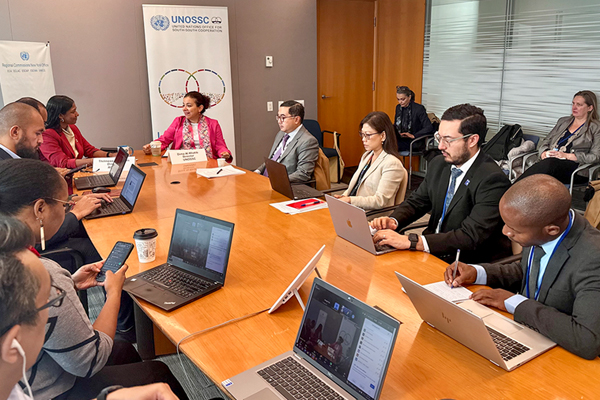
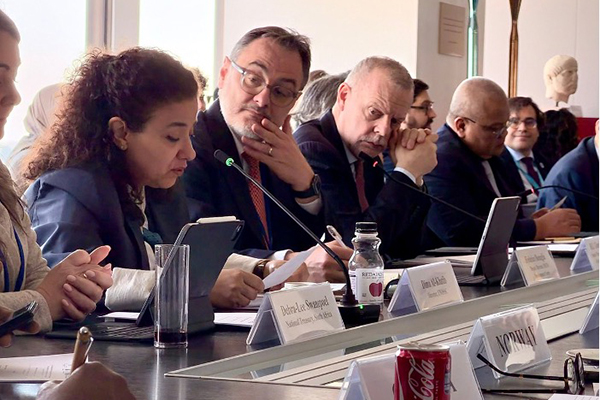
UNOSSC, Regional Commissions New York Office (RCNYO), and the Emerging Development Partners (EDP) Network convened a
cross-regional dialogue on regional integration and cooperation on 28 October 2026. Key messages and recommendations from the dialogue are presented below.
OPENING AND FRAMING SEGMENT
Ms. Thilmeeza Hussain, Director, Regional Commissions New York Office (RCNYO): Cross-regional cooperation is a catalyst for accelerating progress on the SDGs. The five Regional Commissions’ strategic value lies in part in their role as translator of global commitments for regional and national action, and are uniquely positioned to deliver practical, scalable solutions grounded in regional realities. RCNYO appreciates the collaboration with the United Nations Office for South–South Cooperation in co-convening this cross-regional dialogue as a learning and coordination platform, fostering experience sharing and concrete proposals to inform joint regional and inter-regional initiatives.
Ms. Dima Al Khatib, Director, UN Office for South-South Cooperation (UNOSSC): Weakening multilateralism and increasing complexities point to greater need for transformative cooperation. SS&TrC offer concrete pathways for addressing challenges to a more prosperous, inclusive, peaceful, and sustainable world. SS&TrC within and between regions are crucial for building the capacities of the global South to deliver breakthrough solutions as they navigate global complexities. These are countries dramatically transformed (now driving over half of global growth), and cooperation among them is deepening and broadening. The knowledge, tools, and expertise they built through the years (designed for their own context), are significant development capital. Through SS&TrC, they can be deployed where needed in a manner that poses no burden and helps deepen solidarity. Doing so at a regional level broadens the range of partners we can engage in both North and South, mobilized for Southern-led transformation, thus the valuable collaboration between UNOSSC and RCNYO.
SEGMENT I: REGIONAL INTEGRATION AND COOPERATION TRENDS ACROSS REGIONS
Ms. Zeynep Orhun Girard, Chief, Capacity Development and Partnerships, UNESCAP; EDP Network Secretariat (Moderator): SS&TrC are a core modality for the Regional Commissions’ work and, in Asia Pacific, have evolved in response to growing country demand for deeper intra- and inter-regional collaboration. The cornerstone of this work is the Asia-Pacific Director Generals Forum, which matches offers of and requests for technical cooperation. Practical lessons from ongoing efforts highlight four priorities for strengthening SS&TrC: (1) ensure demand-driven aligned with country needs; (2) strengthen agility and coordination among regional partners; (3) engage multi-stakeholder partnerships beyond governments; and (4) empower “champion countries” to lead multi-directional cooperation and peer learning. ESCAP’s Emerging Development Partners (EDP) Network exemplifies this approach, bringing together countries from the Global South that are both recipients and providers of technical assistance supported by dedicated development cooperation institutions. The Network prioritizes capacity building, recognizing the value of interregional peer learning and cooperation. Regional collaboration is essential to accelerate progress on the SDGs, and SS&TrC enables collaboration that is multi-directional, country-led cooperation that builds on national strength.
Ms. Maria Teresa Pisant, Chief (ad interim) Trade Facilitation Section, UNECE: Regional cooperation and solidarity, particularly SS&TrC, are more critical than ever. facilitation, digital connectivity, and cross-border cooperation are engines for regional integration and inclusive growth. Despite progress, however, implementation of cross-border paperless trade systems remains remain uneven, with adoption at around 45 per cent in landlocked developing countries, compared to 65 per cent in more developed economies. This gap represents a missed opportunity to unlock the South–South trade potential. Regional cooperation prioritizes connectivity infrastructure to reduce transaction costs, diversify exports, and position trade a driver of sustainable development. The Regional Commissions provide a powerful platform for this cooperation, supporting international standards, peer-to-peer capacity building and knowledge sharing as well as implementation of cross-border initiatives. Establishing Regional Hubs for SS&TrC focused priority areas such as trade and standardization, digital transit systems and interregional peer learning to scale successful models are recommended.
Mr. Luis Fidel Yanez Pavez, Secretary of the Commission/CEPAL, Office of the Secretary of the Commission/UNECLAC: The LAC region has extensive experience in institutionalizing regional cooperation frameworks that integrate economic, social and environmental objectives. This experience shows that meaningful cooperation requires new metrics that go beyond GDP, capturing inequality, vulnerability, and resilience. ECLAC is advancing such metrics to help countries better target cooperation and assess impact. Key enablers also include innovative instruments, disaster risk management, gender equality, and development cooperation. Gender equality is a cross-cutting pillar of South–South cooperation supported by a regional action plan and toolbox that could be adapted across regions. Aligned with the Sevilla Commitment, the region advances reform of the international financial architecture through strengthened global and regional cooperation, calling for collective action on climate change, inequality, debt, and technological gaps. Partnerships within and between regions are essential, engaging development banks, the private sector, civil society, and regional integration mechanisms. The region seeks to deepen collaborations with Asia and Africa, and ECLAC’s 2027 Regional Conference on South–South Cooperation could serve as a platform for inter-regional exchange, including methodologies, tools, and success stories.
Ms. Yuko Naab, Chief of Partnership and Resource Mobilization, UNECA: Regional economic integration is central to Africa’s long-term structural transformation, and the African Continental Free Trade Area is a cornerstone initiative aimed at boosting intra-African trade by nearly US $3 trillion between 2021 and 2045. Realizing this potential requires addressing persistent structural gaps, high debt burdens, commodity dependence, inadequate infrastructure and transport links, digital divides, limited investment de-risking mechanisms, and low investments in innovation. Digital innovations and entrepreneurship lag, accounting for only 1% of global R&D and attracting investment remains challenging. Poor connectivity, high transport costs and a widening digital divide persist, with only 37% of Africans online. Accelerating structural transformation and sustainable industrialization is therefore essential, particularly through the development of regional value chains. Regional cooperation is pivotal in closing gaps through joint infrastructure financing, capacity development for digital trade, and knowledge exchange on industrialization and value-chain development, such as on attracting investment to implement AfCFTA commitments and to scale up regional production networks. Global South voices in global policy dialogues are also needed, including on financial architecture reforms, climate negotiations, trade, derisking and mobilizing private sector investments, and strengthening science, data and innovation, with a focus on youth.
Mr. Karim Khalil, Secretary of the Commission, UNESCWA: The region has a solid footprint on SS&TrC within the region and collaborations with other regions at both policy and programme levels. Policy-level work aims to align global agreements with regional frameworks and national plans. The Commission has worked with UNOSSC to develop normative guidance, including guidance on incorporating social justice in fragile settings. On the programme level, the region has worked, for instance, with Latin America on reforming social protection schemes and with Africa on clean energy in urban areas. The critical barriers to regional cooperation remain the “Three Fs”— Fragmentation, Finance, and Flow of Knowledge. Fragmentation most significant obstacle, limiting the translation of regional initiatives into results; finance, while available globally, is not sufficiently aligned with regional priorities; and the cross-border flow of knowledge remains weak, with successful solutions often not scaled or shared. Addressing these gaps requires fixing the knowledge loop, including through AI-enabled regional platforms that capture and disseminate home-grown solutions; building pipelines of bankable cross-border or regional projects to attract blended finance; and forging shared long-term visions such as the Arab Vision 2045 to anchor cooperation in a collective regional narrative.
SEGMENT 2: REFLECTIONS FROM ACROSS REGIONS
Regional Financial Institution (Moderator’s framing statement)
Mr. Alasdair Charnock, Principal Partnership Officer (lead of the Resource Mobilization and Partnerships Department), Asia Infrastructure Investment Bank (AIIB): The financial landscape increasingly involves Southern investments, with increasing number of countries from the Global South contributing to development funds. Efforts they support, however, are often fragmented and not always labeled as SSC. Development partners need therefore to look into better coordination between funds, link them to other larger financial channels (such as those by multilateral development banks), and explore how all can be used in a catalytic way alongside strategic mobilization involving private capital and other investment pools. Strengthening collaboration and linkages across financial and development institutions is important, and the Global Financing Playbook launched at FfD4 by IDFC, UNDP, AIIB and others could help inform efforts, including on different aspects of derisking and pipeline development (finding bankable projects is a challenge). Partners need to also look at usual channels innovatively, such as remittances (particularly in the context of Africa) and the role of the diaspora, but from the SSC and financing perspective, again seeing where linkages with other instruments can be made or deepened.
Arab Region
Minister Plenipotentiary, HE Nada El Gizi, Head of the Sustainable Development and International Cooperation Department, League of Arab States: At a time of global uncertainties, financial distress, and fragmentation threatening multilateralism and sustainable development, regional integration and cooperation through SS&TrC are increasingly crucial. In the Arab region, integration is both an economic and a peace-building necessity. Intra-regional trade still accounts for only about 13% of total trade, and intra-regional collaboration has re-emerged as critical for deepening regional value chains and cross-border cooperation on trade and development. The Arab Vision 2045 launched by the League and UNESCWA in May 2025 serves as a forward-looking roadmap towards a peaceful, resilient, and prosperous Arab region –positioning integration not only as an economic mechanism but also as a means for building regional stability, accelerating the SDGs, and encouraging Arab countries to contribute to global development. SS&TrC in the region connects governments, the private sector, and civil society to co-design and finance SDG solutions across borders. It is essential to foster regional and cross-regional cooperation through SS&TrC with solidarity as centerpiece, as established in the Arab Vision 2045, which establishes unity as the region’s strength and cooperation as pathway to its sustainable future.
Latin America and the Caribbean Region (Regional and Cross-Regional Development Cooperation: Government and Regional Intergovernmental/Multisectoral Institutions)
Mr. Enrique O’Faril Julien, Executive Director, Chilean Agency for International Cooperation for Development (Chile as 2025-2027 President of the Regional Conference for South-South Cooperation for Latin America and the Caribbean/ECLAC): Chile is a dual country in terms of international cooperation—it manages and mobilizes development cooperation (although graduated from OECD DAC), given its continuing development gaps; as well as provides development support, mainly on SSC modality, to countries in LAC and beyond. Chile has been engaged in SSC since 1993 and in triangular cooperation since 1996. It is deeply committed to partnerships and, although CAICD is a small agency in terms of budget, it is strong in collaborations and investments within and beyond LAC (with developing as well as advanced economies) focused on strengthening multilateralism. Chile intends to strengthen cross-regional SS&TrC, especially on such priorities as gender equality, environmental sustainability, and mobilizing private sector resources (technical and financial) for SS&TrC, establishing or deepening partnerships with development banks and private companies. It encourages and explores new ways for advancing international cooperation, such as circular cooperation, going beyond and modernizing or transforming traditional donor-recipient relations. It is also keen to strengthen collaborations with UN entities across regions on SS&TrC, which Chile views as the realistic and best way to advance regional integration.
Mr. Martin Clavijo, Executive Director, Uruguayan Agency for International Cooperation, Office of the President (President of Ibero-American Cooperation/SEGIB for SSC) and Mr. Martin Vidal, National Director of Policy for CELAC (Uruguay as 2026 Chair of CELAC): LAC is very diverse, with distinct communities across its Caribbean, Central and South American subregions. Half of CELAC are Small Island Developing States (SIDS), two are Landlocked Developing Countries (LLDCs), and many are Middle-Income Countries (MICs). But, within this diversity, the region is knitted together, with CELAC serving as crucial regional cooperation platform (particularly in deepening political integration in the region). There is momentum for transforming development cooperation in and of the region, showing shifts from traditional North-South or donor-recipient modalities, with efforts focusing on: 1) peace and stability (will elevate role in combating transnational organized crime and narco-trafficking; 2) energy transition (almost half of the region face existential threats of climate change); and, 3) disaster risk reduction (looks to deepen collaborations with Southeast Asia). Uruguay historically championed SS&TrC; it now aims to leverage them further for knowledge sharing, building strong institutions, and advancing sustainable development. It will prioritize building partnerships with international institutions and other Southern countries and regions (including with their financial institutions, development banks, and civil society); developing tools to evaluate and measure social cooperation; and deepening triangular, decentralized, social cooperation. International cooperation works best with regional partners, consolidating efforts around the globe to strengthen national institutions for a world that is changing and becoming increasingly complex, towards building an inclusive and resilient future.
Asia and the Pacific
Mr. Hendrik Jesus Garcia II, Minister, Permanent Mission of the Philippines to the UN (Philippines as Chair of the Like-Minded Group of Middle-Income Countries LMG-MICs and 2026 Chair of ASEAN): SS&TrC are not a replacement for but a vital and necessary complement to traditional North-South cooperation. The collective challenge is how to effectively operationalize them in a very complicated global landscape. They are particularly relevant for MICs, which are growing and achieving development gains but still face middle-income traps and limited access to concessional finance. The Makati Declaration adopted by MICs in April 2025 established SS&TrC as a strategic priority, and cooperation with the Regional Commissions and UNOSSC could be one level of that cooperation. Regional integration is a continuous priority for Asia, which ASEAN has advanced in leaps and bounds over the years. The ASEAN experience shows how different countries at different levels of development can work together, create a community, share growth, and build a future together. ASEAN has evolved into a center of gravity for the region, through which members and subregions in Asia Pacific can co-create a regional identity, collaborate on regionwide growth, and collaborate as a region with other regions. It is crucial to: 1) strengthen interregional SS&TrC through existing frameworks while exploring others that are still not leveraged sufficiently; 2) do more to channel innovative approaches; 3) build innovative financing mechanisms (capital exists, but it is not reaching where needed most); and 4) build cooperation on a scale meeting needs, more sectoral and thematic focused, involving more from across sectors within and from other regions.
Cross-Regional Cooperation (Latin America, Africa, Europe) | Women’s Empowerment
Ms. Amina Magouri, President and Founder, Salma Dialogue (Strategic Alliances: Latin America Meeting Africa, SSTrC Programme): SALMA Dialogue is a South-South and triangular program focused on establishing concrete relationships between Latin America and Africa and both, together, with Europe and North America. Its thematic priorities span economic cooperation, gender equality, promoting women in high-level positions, innovation, and renewable energy. It brings together people from diverse sectors and backgrounds, including decision-makers, private-sector leaders, experts, and international and regional organizations. Ways forward could involve: 1) Promoting SS&TrC for economic cooperation through an inclusive and structured dialogue mechanism (not just another exchange channel but a systematic, sustained and institutionalized mechanism for policy coordination and project-based partnership building. 2) Adopting a result-based management framework for cooperation initiatives (essential for ensuring efficiency, transparency, and accountability. 3) Fostering long-lasting people-centered initiatives, ensuring SS&TrC efforts address structural development challenges. 4) Establishing sustainable financing mechanisms (such as joint investment funds, private-public-private partnerships, or regional facilities) to help projects reach longevity sufficient to deliver impact.
Youth
Mr. Ted Chen, CEO and Co-Founder, Evercomm / NTU Entrepreneurship Academy, Singapore / Asia’s 30 Under 30: There is a growing wave of young people eager to pursue social entrepreneurship in Asia, and many schools and government programs are stepping up to provide support. But entrepreneurship is difficult, and social entrepreneurship is challenging. Many government programs and educational institutions are struggling to develop and provide meaningful, practice-based social entrepreneurship curricula. For example, Nanyang Technological University (NTU), one of the top 20 universities in the world whose master’s program on technopreneurship has produced many awards, still faces difficulties in finding scalable case studies and practitioners who have in-depth understanding of how to make a social venture or a project bankable. To truly empower the next generations of changemakers (the young who are tackling some of the most challenging problems in the 21st century), efforts need to go beyond isolated workshops and short-term projects. There is a need for regional repository of proven social entrepreneurship case studies and best practices, and a systematic way to connect governments, practitioners, and social enterprises in the region and with other regions. SS&TrC can help the region move from siloed efforts to a collective learning ecosystem, with knowledge and experience circulating freely to make social entrepreneurship not just an aspiration for young people but a viable, bankable, and sustainable pathway for positive social change.
Mediterranean
Mr. Mohammed Elrazzaz, Head of Sector, Economic Development and Employment, Union for the Mediterranean): UfM recently launched the Report on Regional Integration in the Mediterranean that examines the state of play of integration in five main domains: trade, finance, industry, movement of people, and education. It shows that integration in the region remains below potential. Key findings include: shift towards high-value added trade and deepening of regional value chains, but financial development and integration remain fragmented, marked by institutional and geographical disparities; challenges around development of connectivity infrastructure especially in the Southern Mediterranean, dampening the functioning of logistics systems and affecting trade potential; labor mobility continues rise due to demographic pressures, labor market disparities, and economic disparities; education and research continue to be crucial to regional integration, yet development remains imbalanced. Recommendations include: develop new trade agreements encompassing services, investments, digital trade and regulatory cooperation while modernizing and enforcing existing pacts; support development of renewable energy infrastructure; enhance labor migration management that respond to the needs of both origin and destination countries; enhance capacities for regional cooperation by increasing public funding for higher education and research especially in the South.
Government
First Secretary of the Director of Cooperation, International Cooperation of the Ministry of Foreign Affairs in Guatemala: For Guatemala, SS&TrC are not merely technical tools; they are concrete expressions of solidarity and shared commitment to development. They represent a more genuine way for countries to accompany one another as equals in building more just, inclusive, and sustainable future. Thus, it appreciates the valuable work of UNOSSC and the Regional Commissions. The global context is marked by economic uncertainty, geopolitical transition, and a decline in official development assistance. Regional cooperation and SS&TrC are fundamental to maintaining multilateral cohesion, strengthening the resilience of economies, and collectively advancing SDG achievement. Looking ahead, it is essential to strengthen international linkages between Latin America, Africa, and Asia on: 1) climate resilience and risk management (sharing best practices and technologies can lead to context-appropriate solutions); 2) human mobility and development (exchange on successful experiences in labor migration and the protection of human rights); and 3) digital economy and support for small and medium-sized enterprise, promoting technology cooperation among countries of the Global South to reduce productive gaps and improve smart access.
Ms. Al Khatib: Dialogues like this need to be sustained, thus the first commitment stakeholders need to make is to convene more frequently, not only to share information but also to identify priorities for collective action. Regional cooperation and collaboration are being raised as priority, and UNOSSC is enhancing efforts and resources in response (e.g., revamping its digital platform South-South Galaxy to be more than a repository of best practices and to serve as a resource pool for policy solutions, enabling connections between demand and supply). Further exchanges could explore and flesh out the recommendations raised: leveraging the knowledge and capacities of diasporas; how remittances can channel catalytic funding; viable approaches to youth entrepreneurship; experience sharing on institutionalization of SS&TrC; connecting and leveraging existing networks; and broadening linkages across sectors and regions.
Ms. Hussain: Regional and interregional cooperation are key drivers of SDG acceleration. The dialogue raised a wealth of ideas where greater impact through regional and interregional cooperation could be realized — from digital connectivity and trade facilitation to new cooperation metrics, innovative financing, and the “Three Fs” framing of Fragmentation, Finance, and Flow of Knowledge. The dialogue raised the imperative to translate regional strengths into cross-regional solutions. The value of the Regional Commissions lies in their ability to serve as bridges between global frameworks and national action, facilitating inter-regional collaboration to help transform fragmented efforts into impactful joint delivery. The dialogue demonstrated the spirit of partnership and the shared determination to scale solutions for greater impact for sustainable development.
RECOMMENDATIONS
(The views expressed in this dialogue are those of the speakers and do not necessarily represent those of the conveners or UN Member States, unless otherwise indicated)
Regional Commissions
- The Regional Commissions have a unique convening and integrative role in connecting global policy agendas with country realities. Together, the five Commissions conveyed a coherent message: Regional platforms that integrate data, policy, and financing deliver greater SDG impact. The Regional Commissions are recognized as conveners and brokers of partnerships—specifically in helping countries identify scalable solutions and connect them to financing opportunities.
- Continue to advance cross-regional dialogues on issues with regionwide relevance and impact, such attracting private investment and innovative finance, as well as scaling up regional production networks. Also, elevate Global South voices in global policy dialogues, such as on financial architecture reforms, climate negotiations, trade, derisking and mobilizing private sector investments, and strengthening science, data, and innovation.
- Continue to advance regional and transboundary projects in line with regional priorities and frameworks (such as digital transit systems), and continue to promote peer learning across regions for scaling of successful models. Also, identify and channel practical mechanisms to finance regional initiatives—particularly blended and de-risked financing models that could attract private investment to South–South projects.
- Address fragmentation, finance gaps, and impediments to flow of knowledge (knowledge pools and solutions are often just next door). Also enhance inter-regional learning, such as through peer exchanges, secondments, and thematic Communities of Practice. Also, enhance data and impact measurement (building, for instance, on ECLAC’s call for new cooperation metrics that capture inequality and resilience).
- Enhance SS&TrC linkages between frameworks of regional organizations, maximizing opportunities to identify and connect efforts (including consolidating financing).
- Promote South-South investment in key priorities such as renewable energy, data infrastructure, and sustainable transport to accelerate inclusive regional growth.
- Empower youth and women for innovation, linking regional think tanks and universities, and promoting scholarships and research networks.
Sectors Across Regions (According to Thematic Priorities Raised)
Coordination and collaboration
- Strengthen collaborations on SS&TrC in and between regions (some raising “institutionalizing” mechanisms to systematically leverage SS&TrC).
- Explore new ways for advancing cooperation, such as circular cooperation in terms of co-creation of projects, going beyond and modernizing or transforming traditional donor-recipient relations.
- Improve coordination across funds supporting development priorities through SS&TrC (which are not reported as such and are often fragmented), linking them and exploring how they can be used in a catalytic way, alongside strategic mobilization involving private capital and other investment pools.
- Strengthen collaboration and linkages across financial and development institutions (using the Global Financing Playbook as guide, among others) including on derisking and pipeline development. Address challenges related to bankable project development.
Strategic partnerships and joint efforts
- Enhance systematic exchanges among the Global South countries (they have much to learn from and share with each other), particularly those common to them such as climate change, social inclusion, and economic growth.
- Leverage regional cooperation to help strengthen national institutions.
- Strengthen interregional SS&TrC through existing frameworks (such as ASEAN and CELAC), while exploring others that are still not leveraged sufficiently (such as long-standing intergovernmental, inter-regional mechanisms with wide memberships like the Forum for East Asia and Latin America cooperation and the Asia-Europe meeting).
- Build cooperation on a scale that meets needs, that are more sectoral and thematic focused, and involving more from across sectors (such as youth, academia, private sector, communities, and networks within and across regions).
- Promote SS&TrC particularly for economic cooperation through an inclusive and structured dialogue mechanism, which systematically convenes sectors across regions and goes beyond exchanges towards facilitating sustained policy coordination and project-based partnership building.
- Foster long-lasting, people-centered initiatives that address structural development challenges.
- Strengthen linkages between regions especially on three key areas: 1) climate resilience and risk management; 2) human mobility and development; and 3) digital economy and support for small and medium-sized enterprises, promoting technology cooperation among countries of the Global South.
Innovating thinking and action
- Explore new ways for advancing international cooperation, such as circular cooperation, and for modernizing or transforming traditional donor-recipient relations.
- Develop a directory of social entrepreneurs that universities, governments, youth and other stakeholders can reach out to and engage with, as well as a repository of case studies and bankable projects that can guide entrepreneurial efforts.
- Build innovative financing mechanisms, reducing the risk perception (noting that capital does exist, but it is not reaching places where it is needed most).
- Channel innovative approaches, going beyond for instance how to reduce costs of remittances but also identify more productive use of remittances and diaspora expertise.
- Adopt a results-based management framework for cooperation initiatives to ensure efficiency, transparency, and accountability (and efforts should go beyond conferences and events).
- Establish (in fact, insist on) sustainable financing mechanisms. Joint investment funds, public-private partnerships, or regional facilities can help projects reach longevity sufficient to deliver impact.
- Go beyond isolated workshops and short-term projects to truly support transformation such as through youth entrepreneurship.
- In the context of the Mediterranean (also applicable in other regions): Develop new trade agreements that encompass services, investments, digital trade and regulatory cooperation while modernizing and enforcing existing pacts; support development of renewable energy infrastructure; enhance labor migration management that responds to the needs of both origin and destination countries; enhance capacities for regional cooperation by increasing public funding for higher education and research especially in the South.