• Home
  • /
  • News
  • /
  • South-South and Triangular Cooperation Can Address the Science, Technology and Innovation Gap

South-South and Triangular Cooperation Can Address the Science, Technology and Innovation Gap


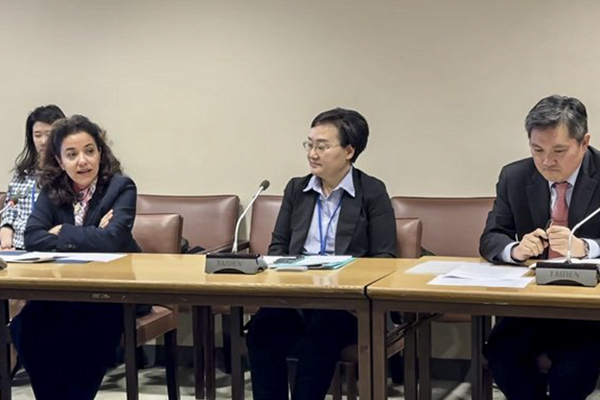
On the sidelines of the 8th Multi-stakeholder Forum on Science, Technology and Innovation (STI) for the Sustainable Development Goals (2023 STI Forum), a policy dialogue was convened to review the progress and challenges of integrating STI into national, regional and global development agenda. This side event was organized by the Science, Technology and Policy Institute (STEPI) of the Republic of Korea, United Nations Industrial Development Organization (UNIDO), United Nations Educational, Scientific and Cultural Organization (UNESCO) Regional Office for East Asia, and the Science Technology Engineering Innovation Policy Asia and the Pacific Network (STEPAN), in collaboration with the United Nations Office for South-South Cooperation (UNOSSC). In her opening remarks, Dr. Mi-Ock Mun, President of STEPI, called for concerted participation of different actors, including scientists and technical experts, to harness the benefits of STI toward achieving the global development goals by aligning national research and development. “As highlighted during the recent Ministerial meeting on South-South cooperation convened alongside the Fifth UN Conference on the Least Developed Countries, this is a critical time given the increasing need for STI to create inclusive, sustainable and resilient development,” said Ms. Dima Al-Khatib, Director of UNOSSC, in her welcome remarks. “South-South and triangular cooperation facilitate sharing among countries including transfer of technical applications,” she added. “This helps developing countries to leapfrog among innovative demand-driven solutions and best practices tailored to their needs, rather than cultivating ideas from scratch.” Ambassador Sangjin Kim, Deputy Permanent Representative of the Republic of Korea to the United Nations emphasized that STI serve as cross cutting enablers to accelerate the progress of SDGs, and highlighted the Republic of Korea’s commitment and contribution to development cooperation focused on digitalization and green technology. Mr. Fernando Santiago, Industrial Policy Officer at UNIDO delivered a presentation entitled, “Using the SDG’s as a reference for STI policy advisory services”. As an example of policy advisory at the global level, he illustrated UNIDO’s approach and flagship services, and explained that effective STI policies require a robust STI ecosystem with efficient policymaking cycles. Prof. Shahbaz Khan, Director, UNESCO Regional Office for East Asia, indicated limitations in mobilizing STI stakeholders for addressing SDGs in the Asia-Pacific region, and shared UNESCO actions on the Science‐Society interface. Presentations from STEPI and the National Institute of Science and Technology (INCT) of Timor-Leste took stock of work undertaken at the national level. Dr. Inkyoung Sun, Head of Sustainable Innovation Policy Research Office at STEPI, introduced the institution’s recent study on the linkages between the national STI plan and SDGs in the Republic of Korea. “Though RoK’s national R&D projects over the past decade did not directly concentrate on SDGs, about 68% of the country’s public development research findings have the potential to contribute to SDG achievement,” said Dr. Sun. Mr. José Cornélio Guterres, Executive President of INCT identified limited legal instruments, infrastructure and human and financial resources as key challenges to implement national STI policy in the country.  
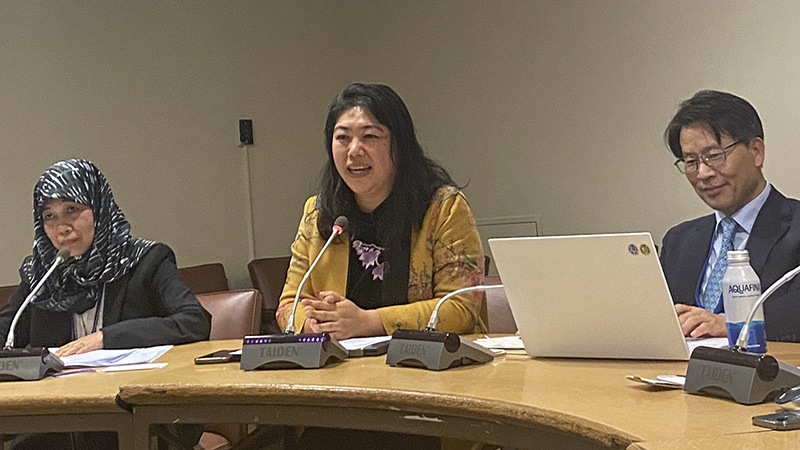
Prof. Aini Suzana Ariffin (STEPFAN), Ms. Xiaojun Grace Wang (UNOSSC), Dr. Hwanil Park (STEPI).
  A panel discussion was moderated by Dr. Hwanil Park, Chief Director of the Global Innovation Strategy Research Division at STEPI. During the discussion Ms. Xiaojun Grace Wang, Trust Fund Director, UNOSSC, shared the Office’s integrated work, ranging from advisory services, advocacy, and fund management, to field projects including the mapping of South-South cooperation on STI and the RoK-UNOSSC Facility on the water-energy-food nexus in the Mekong Region through science and technology (P-LINK). Prof. Aini Suzana Ariffin, Chair of STEPAN, and Dr. Dong Un Park, Associate Research Fellow at STEPI, also addressed the panel. The meeting suggested that multi-stakeholder engagement through South-South and triangular cooperation can unlock the STI gap between different actors, and connect and mobilize expertise and resources, including centres of excellence, academia and the private sector.  
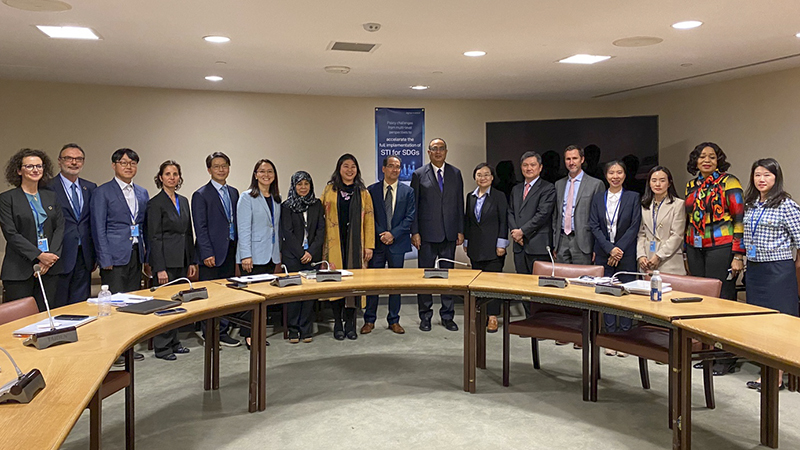
Group Photo.

 

Related Post


  • All Post
  • ATCT Featured Publications POM
  • BAPA+40
  • Blog
  • Capacity Development Initiatives
  • CICETE Featured Publications POM
  • CIKD
  • Cities Clusters - Agriculture
  • Cities Clusters - COVID-19
  • Cities Clusters - COVID-19 Knowledge Products
  • Cities Clusters - DRR
  • Cities Clusters - E-commerce
  • Cities Clusters - Tourism
  • Cities Clusters - Tourism Knowledge Products
  • Cities Clusters - Transport
  • Cities Clusters - Waste
  • Cities Project
  • Cities Project COVID-19 Newsletters
  • Cities Project COVID-19 Response
  • Cities Project Knowledge Products
  • Classic (untouched)
  • Climate Action
  • COMSATS Featured Publications POM
  • COMSATS Featured Solutions POM
  • Converted from Divi
  • Converted from Mixed
  • Converted from WPBakery
  • COVID-19
  • COVID-19 Page Featured Solutions
  • DRR Knowledge Products
  • DRR News
  • Empty Post
  • Events
  • Featured Event UN-Habitat POM
  • Financing for Development
  • Financing Mechanisms
  • g7+
  • Gender Events
  • Gender News
  • Good Practices in SSTrC Series
  • Good Practices Publications
  • Good Practices Thematic Series & Special Editions
  • Good Practices Vol. 2
  • Good Practices Vol. 3
  • GSSDC
  • Highlighted
  • Highlighted Publications
  • IAEA Featured Solutions POM
  • IBRAF Featured Publications POM
  • IBSA Fund
  • IBSA Fund Annual Reports
  • IBSA Fund News and Stories
  • IBSA Fund Publication
  • IBSA Fund Story
  • ICGEB Featured Events POM
  • ICGEB Featured Publications POM
  • ICGEB Featured Solutions POM
  • ILO Featured Events POM
  • ILO Featured Publications POM
  • ILO Featured Solutions POM
  • India-UN Development Partnership Fund
  • India-UN Fund Publication
  • India-UN Fund Story
  • IsDB
  • IsDB Featured Publications POM
  • IsDB SCC
  • News
  • Norec Featured Publications POM
  • Norec Featured Solutions POM
  • Peace and Development
  • PGTF Publications
  • PGTF Story
  • PICA Featured News POM
  • PICA Featured Publications POM
  • PICA Featured Solutions POM
  • PIDF Featured Publications POM
  • Publications
  • Regional Updates
  • Research
  • ROK-UNOSSC Facility
  • SGP Featured Publication POM
  • SGP Featured Solutions POM
  • Solution
  • South South in Action
  • South-South Global Thinkers
  • South-South Ideas
  • South-South Ideas Series
  • South-South in Action Series
  • Southern Response to COVID-19
  • SSN4PSI Featured Publications POM
  • SSN4PSI Featured Solutions POM
  • Training
  • UN Day for SSC 2020
  • UN Fund for SSC
  • UN SSC Day Publications
  • UN-Habitat Featured Publications POM
  • UN-HABITAT Featured Solutions POM
  • UNCCT
  • UNEP Featured Publications POM
  • UNFPA
  • UNFSSC Publication
  • UNFSSC Story
  • UNIDO Featured Publications POM
  • UNIDO Featured Solutions POM
  • UNIDO POM Events
  • UNOCT Featured Publications POM
  • UNV
  • UNV Featured Publications POM
  • WB Featured Publications POM
  • WB Featured Solutions POM
  • Webinars
  • WFP Featured Events POM
  • WFP Featured Publication POM
  • WFP Featured Solutions POM
  • WIPO
  • Workshops and Seminars
  • Youth4South
  • z Across the Globe 1
  • z Across the Globe 2
  • z Across the Globe 4
  • z Across the Globe 5
  • z Across the Globe 6
  • z Across the Globe 7
  • z Across the Globe 8
  • z ES BAPA+40
  • z ES Eventos
  • z ES Noticias
  • z ES Noticias Destacadas
  • z ES Publicaciones
  • z ES Publicaciones Destacadas
  • z ES Serie Buenas Prácticas en la CSSyT
  • z ES Serie El Sur-Sur en Acción
  • z FR Actualités
  • z FR BAPA+40
  • z FR Événements
  • z FR Publications
  • z FR Publications en vedette
  • z FR Série Bonnes pratiques en CSST
  • z FR Série Sud-Sud en action
  • z Highlighted News
  • z Photos
  • z Videos
  • z ZH BAPA+40
  • z ZH Events
  • z ZH News

ABOUT

Terms of Service

Privacy Policy

Disclosures

RESOURCES

Terms of Service

Privacy Policy

Disclosures

ENGAGE

Terms of Service

Privacy Policy

Disclosures

Copyright © UNOSSC/UNDP

wpChatIcon
wpChatIcon

Alliance Application Form

Submit an Expression of Interest and/or Demand Signal. UNOSSC reviews submissions on a rolling basis.

1. Official name of organization / institution / government entity (exclusions to apply) *
2. Country *
3. Region *
4. SDG *
Secondary SDG *
5. Partner category *
6. Website *
7. Brief description of your institution (max. 150 words) *
Name for the Lead *
Title for the Lead *
Email address for the Lead *
Name for the co-lead
Title for the co-lead
Email address for the co-lead
Section 3. Expression of Interest in the Alliance *
Additional information on proposed areas of engagement may be requested through the platform following initial review by the Alliance Secretariat.
Section 4. Due Diligence and Integrity Declaration *

Submission Note:

  • Submission of this Expression of Interest form does not automatically confer participation in the Alliance.
  • All submissions will be reviewed by the Alliance Secretariat, including basic eligibility screening and proportionate due diligence, as appropriate.
  • Participation in Alliance activities is determined based on relevance to articulated cooperation needs, alignment with Alliance principles, and integrity considerations.
  • Engagement under the Alliance is voluntary, non-binding, and facilitative in nature, and does not constitute funding approval, contractual commitment, or institutional membership.
  • The Alliance Secretariat may contact submitting entities for additional information or clarification during the review process.

Submission of Demand Form

Description of Demand

Indicate the type of support or cooperation requested through the Alliance.
Please briefly describe the challenge, gap, or priority. (Max. 300 words)

Thematic and Geographic Focus

Please indicate the main focus areas of your demand:

A. Thematic Areas (select up to three)
B. Geographic Focus (select all that apply)

Proposed Engagement Modalities

Please indicate how you would like to engage through the Alliance (select all that apply):

Expected Outcomes

Please indicate the main results you seek to achieve through this engagement. (Max. 200 words)
Examples:
• Capacity strengthened
• Partnerships established
• Sectoral or regional strategies co-developed
• Solutions piloted
• Knowledge generated
• Policies informed

Timeline and Readiness (if applicable)

1. Expected timeframe for engagement:
2. Current stage:

Additional Information

Please provide any additional information, documents, or links relevant to this submission.
(Max. 200 words or upload link)

Submission of Offer Form

Description of Contribution

Indicate the type of contribution your institution can provide and describe the expertise, resources, or solutions you may offer.
Please briefly describe your proposed contribution. (Max. 300 words)

Thematic and Geographic Focus

Please indicate the main focus areas of your interest:

A. Thematic Areas (select up to three)
B. Geographic Focus (select all that apply)

Proposed Engagement Modalities

Please indicate how you would like to engage through the Alliance (select all that apply):

Expected Outcomes

Please indicate the main results you aim to achieve through this engagement. (Max. 200 words)
Examples:
• Capacity strengthened
• Partnerships established
• Sectoral or regional strategies co-developed
• Solutions piloted
• Knowledge generated
• Policies informed

Timeline and Readiness (if applicable)

1. Expected timeframe for engagement:
2. Current stage:

Additional Information

Please provide any additional information, documents, or links relevant to this submission.
(Max. 200 words or upload link)

Organization Registration

Authentication & Due Diligence This prototype simulates identity verification, due diligence confirmation, and an authentication step before submission. *

First Name *
Last Name *
Email address *
Password *
Confirm Password *
Name of institution / organization *
Country / Region *
Organization Type *
Organization other *
Function / role *
Organization logo *
Maximum file size: 1 GB

Login

Login / email *
Password *
Remember me

Forgot password?

Connect form

Your name *
Email *
Organization / institution *
Job title / role *
Reason for connecting:
Short message

Scroll to Top