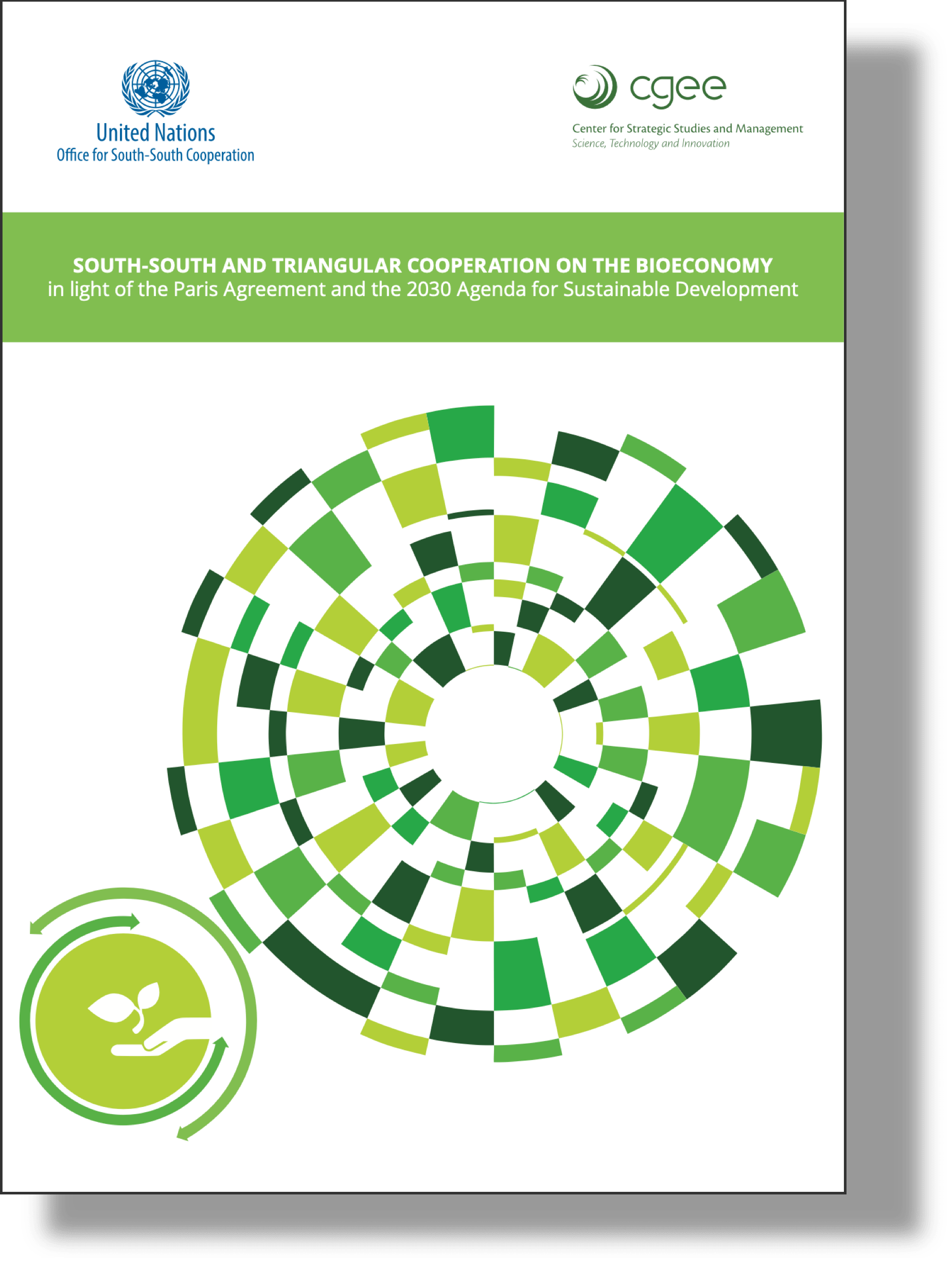
South-South and Triangular Cooperation on the Bioeconomy


Tackling climate change and fostering sustainable development are two mutually reinforcing sides of the same coin. A shift to economic, environmental and social sustainability is a prerequisite for addressing climate change, while at the same time low-emission climate-resilient development is required for achieving the SDGs.

Relying only on North-South development cooperation models will not be sufficient for developing countries to achieve the bold ambitions of the Paris Agreement and the SDGs. South-South cooperation does not substitute, but complements North-South development cooperation as an important means through which developing countries can voluntarily assist each other in undertaking climate action and pursuing the achievement of the SDGs. Many countries from the Global South are rich in indigenous knowledge and traditional technologies that are crucial for adapting to the adverse impacts of climate change. There are also many new technologies for climate change adaptation and mitigation originating from developing countries, which are likely to be more suitable and cost-effective for other developing countries as they are well attuned to similar geo-climatic, cultural and/or socioeconomic conditions.
Download PDF

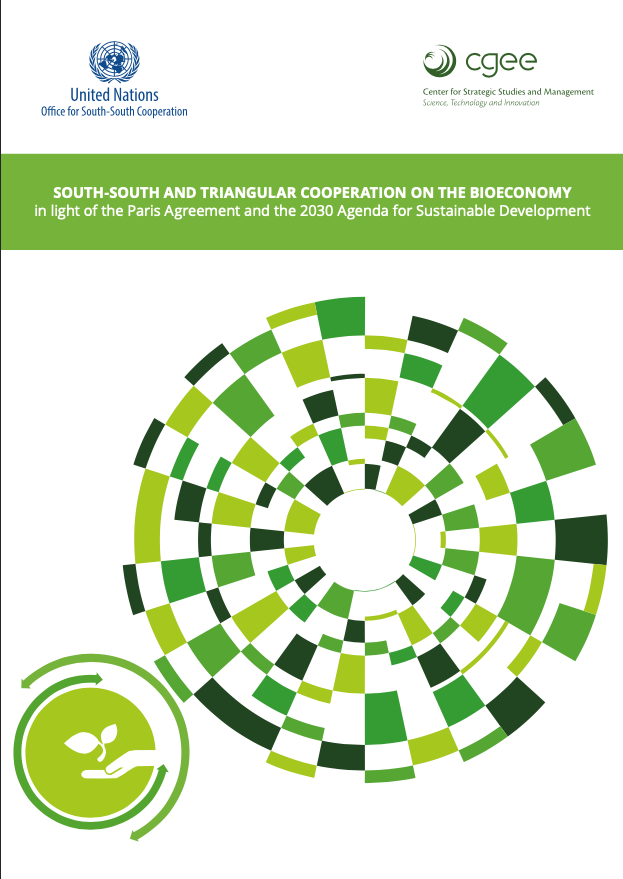
The central theme of this report is how developing countries are working together on fostering bioeconomy solutions, and how these solutions can contribute to the implementation of the Paris Agreement and the achievement of the SDGs. The report highlights the importance of knowledge-sharing on technologies, practices and experiences to foster the use of bio-based solutions in developing countries. The Global South has an abundant biomass and a great variety of approaches and technologies to use biomass for low-emission energy solutions, increasing resource efficiencies in agriculture and industry, enhancing food security, generating jobs and reducing gender inequalities. However, some of these approaches or technologies only exist in one country or region and require SSC for their broader application.

The report is intended to serve as a knowledge resource to inspire, replicate and upscale SSTC in the bioeconomy by providing insights into practical and effective development solutions undertaken by Southern countries. Nine case studies from Africa, Asia and Latin America are presented as a reference source for other developing countries and for developed countries that wish to support SSC in this area through triangular cooperation. The case studies provide an illustrative overview of the ways in which SSTC initiatives on the bioeconomy are being undertaken by and in developing countries, and how these initiatives make tangible contributions to the achievement of the SDGs and the implementation of the Paris Agreement.
ABOUT

Terms of Service

Privacy Policy

Disclosures

RESOURCES

Terms of Service

Privacy Policy

Disclosures

ENGAGE

Terms of Service

Privacy Policy

Disclosures

Copyright © UNOSSC/UNDP

wpChatIcon
wpChatIcon

Alliance Application Form

Submit an Expression of Interest and/or Demand Signal. UNOSSC reviews submissions on a rolling basis.

1. Official name of organization / institution / government entity (exclusions to apply) *
2. Country *
3. Region *
4. SDG *
Secondary SDG *
5. Partner category *
6. Website *
7. Brief description of your institution (max. 150 words) *
Name for the Lead *
Title for the Lead *
Email address for the Lead *
Name for the co-lead
Title for the co-lead
Email address for the co-lead
Section 3. Expression of Interest in the Alliance *
Additional information on proposed areas of engagement may be requested through the platform following initial review by the Alliance Secretariat.
Section 4. Due Diligence and Integrity Declaration *

Submission Note:

  • Submission of this Expression of Interest form does not automatically confer participation in the Alliance.
  • All submissions will be reviewed by the Alliance Secretariat, including basic eligibility screening and proportionate due diligence, as appropriate.
  • Participation in Alliance activities is determined based on relevance to articulated cooperation needs, alignment with Alliance principles, and integrity considerations.
  • Engagement under the Alliance is voluntary, non-binding, and facilitative in nature, and does not constitute funding approval, contractual commitment, or institutional membership.
  • The Alliance Secretariat may contact submitting entities for additional information or clarification during the review process.

Submission of Demand Form

Description of Demand

Indicate the type of support or cooperation requested through the Alliance.
Please briefly describe the challenge, gap, or priority. (Max. 300 words)

Thematic and Geographic Focus

Please indicate the main focus areas of your demand:

A. Thematic Areas (select up to three)
B. Geographic Focus (select all that apply)

Proposed Engagement Modalities

Please indicate how you would like to engage through the Alliance (select all that apply):

Expected Outcomes

Please indicate the main results you seek to achieve through this engagement. (Max. 200 words)
Examples:
• Capacity strengthened
• Partnerships established
• Sectoral or regional strategies co-developed
• Solutions piloted
• Knowledge generated
• Policies informed

Timeline and Readiness (if applicable)

1. Expected timeframe for engagement:
2. Current stage:

Additional Information

Please provide any additional information, documents, or links relevant to this submission.
(Max. 200 words or upload link)

Submission of Offer Form

Description of Contribution

Indicate the type of contribution your institution can provide and describe the expertise, resources, or solutions you may offer.
Please briefly describe your proposed contribution. (Max. 300 words)

Thematic and Geographic Focus

Please indicate the main focus areas of your interest:

A. Thematic Areas (select up to three)
B. Geographic Focus (select all that apply)

Proposed Engagement Modalities

Please indicate how you would like to engage through the Alliance (select all that apply):

Expected Outcomes

Please indicate the main results you aim to achieve through this engagement. (Max. 200 words)
Examples:
• Capacity strengthened
• Partnerships established
• Sectoral or regional strategies co-developed
• Solutions piloted
• Knowledge generated
• Policies informed

Timeline and Readiness (if applicable)

1. Expected timeframe for engagement:
2. Current stage:

Additional Information

Please provide any additional information, documents, or links relevant to this submission.
(Max. 200 words or upload link)

Organization Registration

Authentication & Due Diligence This prototype simulates identity verification, due diligence confirmation, and an authentication step before submission. *

First Name *
Last Name *
Email address *
Password *
Confirm Password *
Name of institution / organization *
Country / Region *
Organization Type *
Organization other *
Function / role *
Organization logo *
Maximum file size: 1 GB

Login

Login / email *
Password *
Remember me

Forgot password?

Connect form

Your name *
Email *
Organization / institution *
Job title / role *
Reason for connecting:
Short message

Scroll to Top