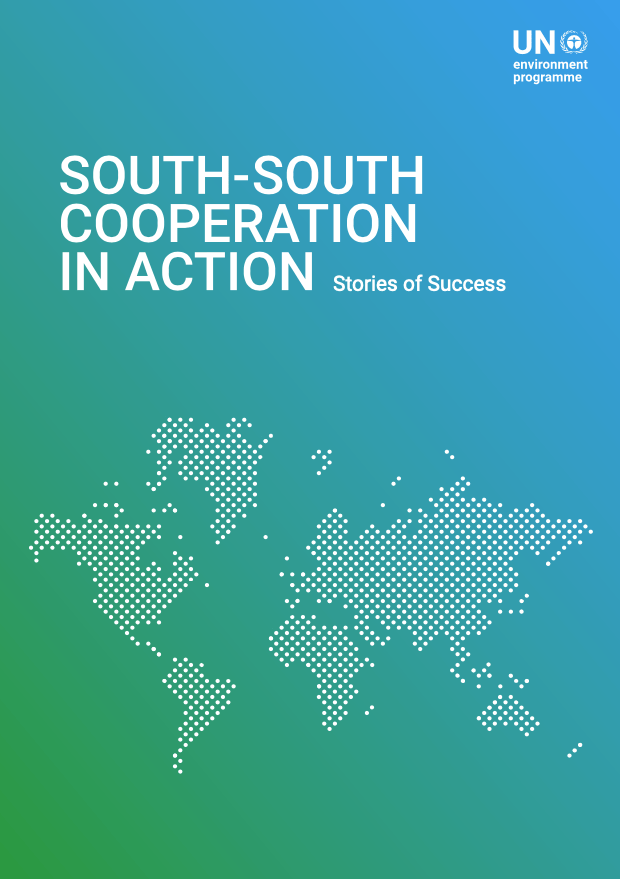
South-South Cooperation in Action: Stories of Success


Since 1978, when the delegations from 138 states adopted a Plan of Action for Promoting and Implementing Technical Cooperation among Developing Countries (the Buenos Aires Plan of Action), South-South Cooperation and “Triangular Cooperation” – collaboration among developing countries and a developed-world partner – have been recognized as important means of development cooperation and technology transfer.

In March 2019, during the Second United Nations High-Level Conference on South-South Cooperation, the international community reaffirmed its commitment to South South Cooperation (SSC) and called for greater South-South cooperation to achieve sustainable development. The Bali Strategic Plan (BSP) on Technology Support and Capacity Building of 2005 (UNEP/GC.23/6/Add.1) recognized South-South cooperation as a means of supporting capacity-building efforts in developing countries and countries with economies in transition through systematic partnerships and the exchange of expertise, experiences, best practices and knowledge among experts and institutions of the South.
Download PDF

Collaboration among countries in the developing world promotes country or regional ownership of new policies and facilitates the uptake of new technologies and methodologies. Indeed, the Sustainable Development Goals stress the importance of South-South cooperation in implementing the 2030 Agenda. Goal 17, “Revitalize the global partnership for sustainable development,” places particular emphasis on the critical role of South-South and triangular cooperation in achieving this ambitious development agenda

The United Nations Environment Programme (UNEP) has for many years used South-South and Triangular Cooperation in the delivery of the organization’s programme of work, and it continues to do so today. This pamphlet showcases UNEP’s engagement in this approach through a variety of projects and initiatives conducted over the past few years. Key lessons learned in the implementation of these projects can help us to better structure and implement South-South and Triangular Cooperation.

The projects and initiatives highlighted in this document demonstrate how South-South and Triangular Cooperation can facilitate and catalyse environmental management, policy development, and implementation. These examples make the case for increased focus on South-South Cooperation to achieve impact and increase efficiency. They demonstrate that the tailored and purposeful application of this approach can enhance countries’ abilities to attain the SDGs as well as efficiency of UN agencies and other development partners in supporting them towards this goal
ABOUT

Terms of Service

Privacy Policy

Disclosures

RESOURCES

Terms of Service

Privacy Policy

Disclosures

ENGAGE

Terms of Service

Privacy Policy

Disclosures

Copyright © UNOSSC/UNDP

wpChatIcon
wpChatIcon

Alliance Application Form

Submit an Expression of Interest and/or Demand Signal. UNOSSC reviews submissions on a rolling basis.

1. Official name of organization / institution / government entity (exclusions to apply) *
2. Country *
3. Region *
4. SDG *
Secondary SDG *
5. Partner category *
6. Website *
7. Brief description of your institution (max. 150 words) *
Name for the Lead *
Title for the Lead *
Email address for the Lead *
Name for the co-lead
Title for the co-lead
Email address for the co-lead
Section 3. Expression of Interest in the Alliance *
Additional information on proposed areas of engagement may be requested through the platform following initial review by the Alliance Secretariat.
Section 4. Due Diligence and Integrity Declaration *

Submission Note:

  • Submission of this Expression of Interest form does not automatically confer participation in the Alliance.
  • All submissions will be reviewed by the Alliance Secretariat, including basic eligibility screening and proportionate due diligence, as appropriate.
  • Participation in Alliance activities is determined based on relevance to articulated cooperation needs, alignment with Alliance principles, and integrity considerations.
  • Engagement under the Alliance is voluntary, non-binding, and facilitative in nature, and does not constitute funding approval, contractual commitment, or institutional membership.
  • The Alliance Secretariat may contact submitting entities for additional information or clarification during the review process.

Submission of Demand Form

Description of Demand

Indicate the type of support or cooperation requested through the Alliance.
Please briefly describe the challenge, gap, or priority. (Max. 300 words)

Thematic and Geographic Focus

Please indicate the main focus areas of your demand:

A. Thematic Areas (select up to three)
B. Geographic Focus (select all that apply)

Proposed Engagement Modalities

Please indicate how you would like to engage through the Alliance (select all that apply):

Expected Outcomes

Please indicate the main results you seek to achieve through this engagement. (Max. 200 words)
Examples:
• Capacity strengthened
• Partnerships established
• Sectoral or regional strategies co-developed
• Solutions piloted
• Knowledge generated
• Policies informed

Timeline and Readiness (if applicable)

1. Expected timeframe for engagement:
2. Current stage:

Additional Information

Please provide any additional information, documents, or links relevant to this submission.
(Max. 200 words or upload link)

Submission of Offer Form

Description of Contribution

Indicate the type of contribution your institution can provide and describe the expertise, resources, or solutions you may offer.
Please briefly describe your proposed contribution. (Max. 300 words)

Thematic and Geographic Focus

Please indicate the main focus areas of your interest:

A. Thematic Areas (select up to three)
B. Geographic Focus (select all that apply)

Proposed Engagement Modalities

Please indicate how you would like to engage through the Alliance (select all that apply):

Expected Outcomes

Please indicate the main results you aim to achieve through this engagement. (Max. 200 words)
Examples:
• Capacity strengthened
• Partnerships established
• Sectoral or regional strategies co-developed
• Solutions piloted
• Knowledge generated
• Policies informed

Timeline and Readiness (if applicable)

1. Expected timeframe for engagement:
2. Current stage:

Additional Information

Please provide any additional information, documents, or links relevant to this submission.
(Max. 200 words or upload link)

Organization Registration

Authentication & Due Diligence This prototype simulates identity verification, due diligence confirmation, and an authentication step before submission. *

First Name *
Last Name *
Email address *
Password *
Confirm Password *
Name of institution / organization *
Country / Region *
Organization Type *
Organization other *
Function / role *
Organization logo *
Maximum file size: 1 GB

Login

Login / email *
Password *
Remember me

Forgot password?

Connect form

Your name *
Email *
Organization / institution *
Job title / role *
Reason for connecting:
Short message

Scroll to Top