• Home
  • /
  • Publications
  • /
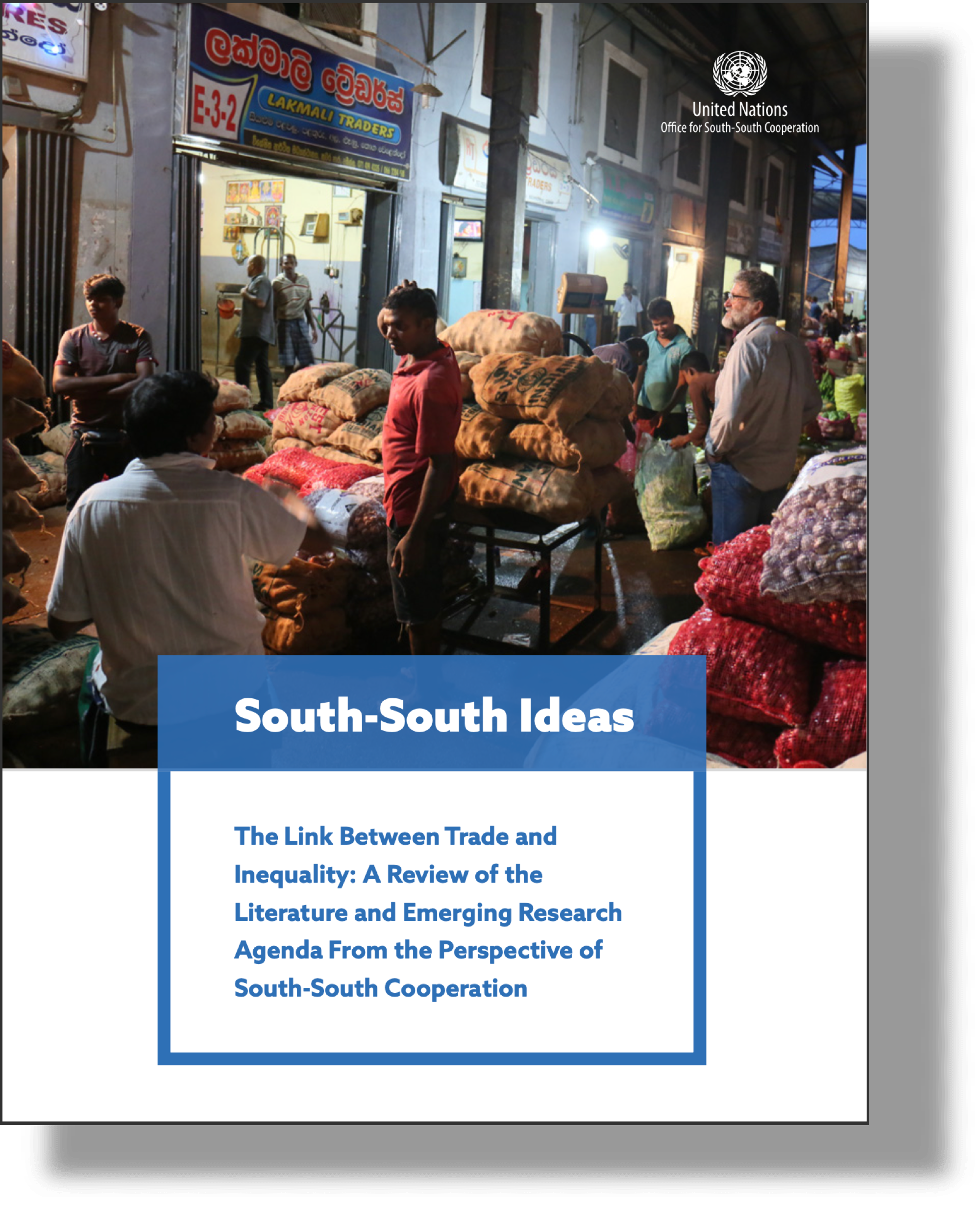
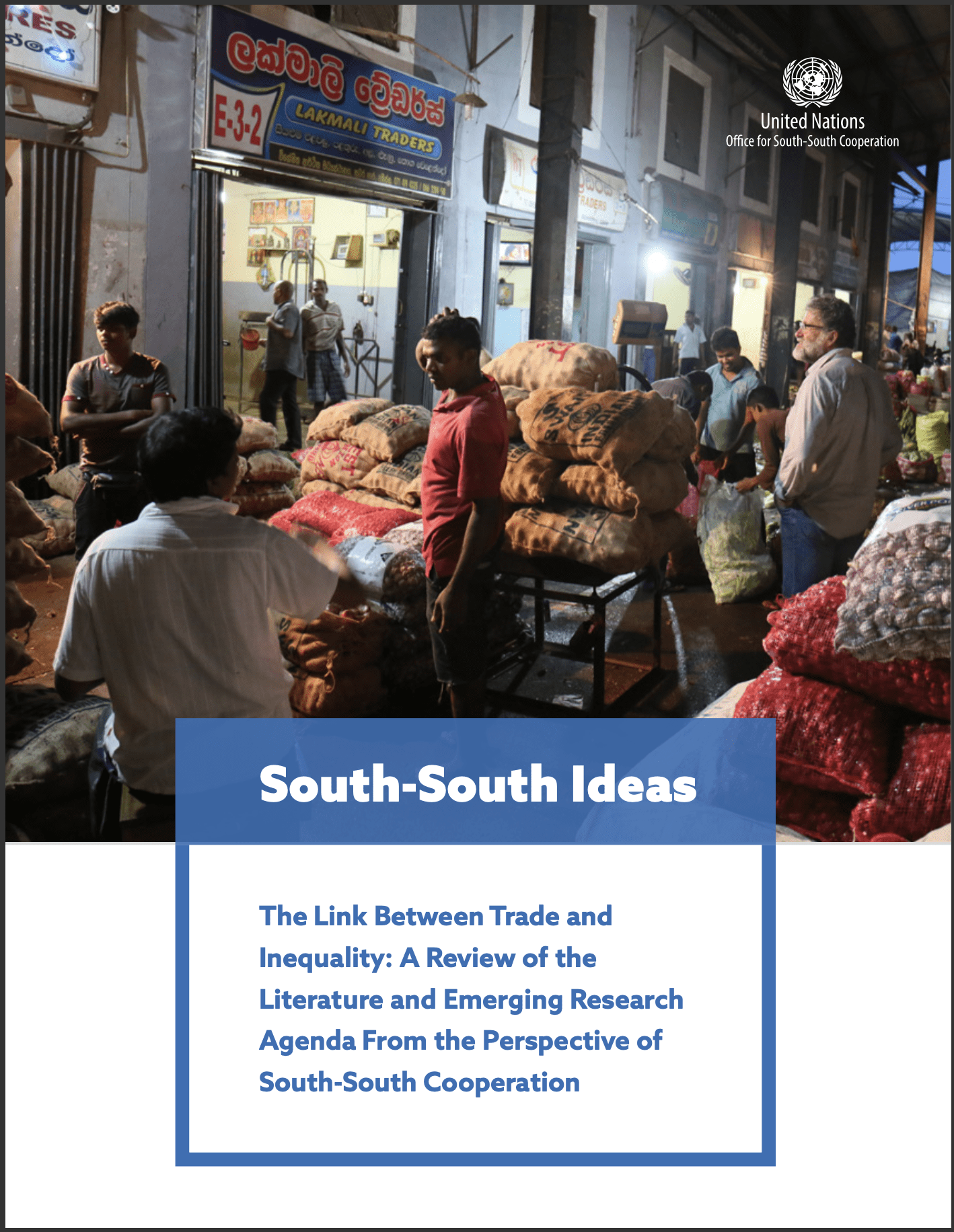
  • South-South Ideas: The Link Between Trade and Inequality – A Review of the Literature and Emerging Research Agenda From the Perspective of South-South Cooperation

South-South Ideas: The Link Between Trade and Inequality – A Review of the Literature and Emerging Research Agenda From the Perspective of South-South Cooperation


South-South Ideas paper by Dr. Milindo Chakrabarti, visiting fellow at the Research and Information System for Developing Countries (RIS) and a professor at the O.P. Jindal Global University, India.


This paper constructs a hypothesis that South-South trade based on the logic of sharing may provide an alternative way to guide international trade and help reduce the scourge of inequality that is observed globally. Reviewing both the theoretical and empirical literature on globalization, in general, and international trade, in particular, it argues that while developed countries are facing increasing levels of internal inequality their Southern counterparts are no less vulnerable. The extant literature suggests five drivers of inequality are being observed globally: trade, financial deepening, technological advances, domestic policy changes and differential access to the inputs required for human development, all of which are intricately linked to each other. These drivers are contributing to intra-country inequalities in income and wealth distribution with a disproportionately higher incidence of wage inequality. This points to the significant role played by the present structure of trade based on the notion of “competitive advantage” in contributing to the rise in inequality, whether directly or indirectly.
Download PDF

The evolution of the theoretical understanding of “comparative advantage” and its subsequent reformulation into a notion of “competitive advantage” as the technical basis of trade, with near-total neglect of the bi-directional causality between trade and the domestic features of a country, has perhaps failed to appreciate the linkage between trade and inequality. A trade theory that was fundamentally developed on the assumptions of perfect competition in the factor and product markets and technology differentials, in an era of factor immobility under an assumed regime of “diminishing returns”, has lost its relevance today. This calls for a new approach to constructing its theoretical basis.

A different structural perspective on global trade developed during the 1950s and 1960s under the nomenclature of “dependency” and “center-periphery theories”. However, this could not sustain the overwhelmingly empirical perspective of the literature on trade, until it was revived under the name of “new trade theory”. The gradually increasing share of South-South trade over the last couple of decades and its resilience in the face of COVID-linked disruption, as observed by a very recent document (UNCTAD, 2020) call for a thorough theoretical and empirical understanding of the nature and implications of South-South trade. The conceptual framework of a “development compact” that has evolved to capture the ethos of South-South Cooperation is an effective way to operationalize the linkage between capacity building, trade, investment, technology sharing and development finance in the quest for the development of the Global South. This points to the importance of “cooperative advantage” in contributing to the welfare of citizens in need.

The paper provides a tentative new research agenda for immediate consideration in our quest for empirical validation of the “development compact” in ensuring “gains from trade” and their subsequent distribution among stakeholders in an equitable manner.
Connect with UNOSSC

Stay updated with the latest trends in South-South cooperation and access our vast repository of knowledge.

Copyright © UNOSSC/UNDP

Alliance Application Form

Submit an Expression of Interest and/or Demand Signal. UNOSSC reviews submissions on a rolling basis.

1. Official name of organization / institution / government entity (exclusions to apply) *
Organization logo
Maximum file size: 20 MB
2. Country *
3. Region *
4. SDG *
5. Partner category *
6. Website *
7. Brief description of your institution (max. 150 words) *
Name for the Lead *
Title for the Lead *
Email address for the Lead *
Name for the co-lead
Title for the co-lead
Email address for the co-lead
Section 3. Expression of Interest in the Alliance *
Additional information on proposed areas of engagement may be requested through the platform following initial review by the Alliance Secretariat.
Section 4. Due Diligence and Integrity Declaration *

Submission Note:

  • Submission of this Expression of Interest form does not automatically confer participation in the Alliance.
  • All submissions will be reviewed by the Alliance Secretariat, including basic eligibility screening and proportionate due diligence, as appropriate.
  • Participation in Alliance activities is determined based on relevance to articulated cooperation needs, alignment with Alliance principles, and integrity considerations.
  • Engagement under the Alliance is voluntary, non-binding, and facilitative in nature, and does not constitute funding approval, contractual commitment, or institutional membership.
  • The Alliance Secretariat may contact submitting entities for additional information or clarification during the review process.

Submission of Demand Form

Description of Demand

Indicate the type of support or cooperation requested through the Alliance.
Please briefly describe the challenge, gap, or priority. (Max. 300 words)

Thematic and Geographic Focus

Please indicate the main focus areas of your demand:

A. Thematic Areas (select up to three)
B. Geographic Focus (select all that apply)

Proposed Engagement Modalities

Please indicate how you would like to engage through the Alliance (select all that apply):

Expected Outcomes

Please indicate the main results you seek to achieve through this engagement. (Max. 200 words)
Examples:
• Capacity strengthened
• Partnerships established
• Sectoral or regional strategies co-developed
• Solutions piloted
• Knowledge generated
• Policies informed

Timeline and Readiness (if applicable)

1. Expected timeframe for engagement:
2. Current stage:

Additional Information

Please provide any additional information, documents, or links relevant to this submission.
(Max. 200 words or upload link)

Submission of Offer Form

Description of Contribution

Indicate the type of contribution your institution can provide and describe the expertise, resources, or solutions you may offer.
Please briefly describe your proposed contribution. (Max. 300 words)

Thematic and Geographic Focus

Please indicate the main focus areas of your interest:

A. Thematic Areas (select up to three)
B. Geographic Focus (select all that apply)

Proposed Engagement Modalities

Please indicate how you would like to engage through the Alliance (select all that apply):

Expected Outcomes

Please indicate the main results you aim to achieve through this engagement. (Max. 200 words)
Examples:
• Capacity strengthened
• Partnerships established
• Sectoral or regional strategies co-developed
• Solutions piloted
• Knowledge generated
• Policies informed

Timeline and Readiness (if applicable)

1. Expected timeframe for engagement:
2. Current stage:

Additional Information

Please provide any additional information, documents, or links relevant to this submission.
(Max. 200 words or upload link)

Organization Registration

Authentication & Due Diligence This prototype simulates identity verification, due diligence confirmation, and an authentication step before submission. *

First Name *
Last Name *
Email address *
Password *
Confirm Password *
Name of institution / organization *
Country / Region *
Organization Type *
Organization other *
Function / role *
Organization logo *
Maximum file size: 1 GB

Login

Login / email *
Password *
Remember me

Forgot password?

Connect form

Your name *
Email *
Organization / institution *
Job title / role *
Reason for connecting:
Short message

Scroll to Top