• Home
  • /
  • Publications
  • /
  • South-South Ideas: The Role of Institutional Arrangements for South-South Cooperation – Experiences from Ecuador and Sri Lanka

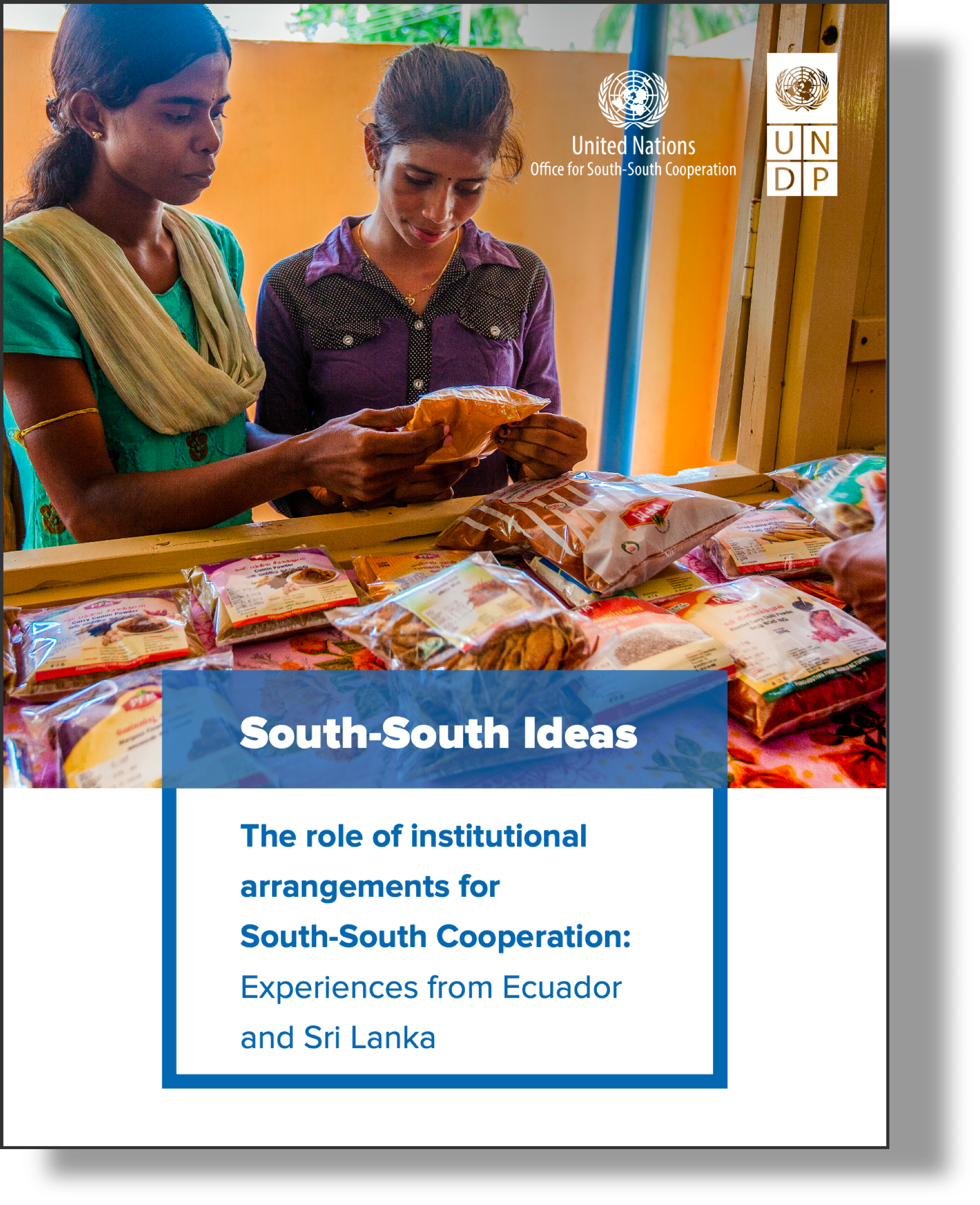
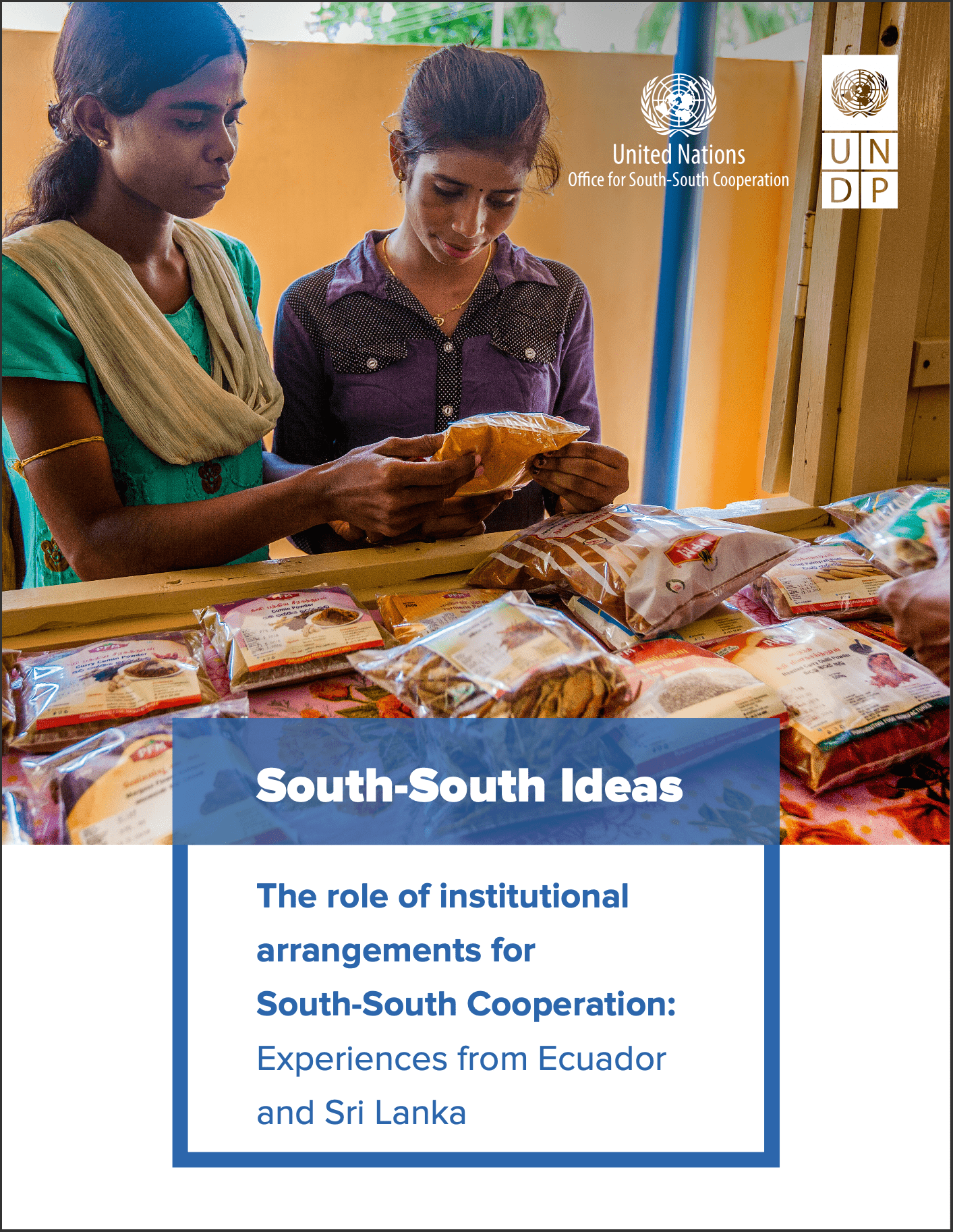
South-South Ideas: The Role of Institutional Arrangements for South-South Cooperation – Experiences from Ecuador and Sri Lanka


Research paper authored by Marcela Morales H.1, Southern Voice; Cristina Ordoñez & Andrés Gutierrez, Grupo FARO in Ecuador; and Kithmina Hewage & Harini Weerasekera, Institute of Policy Studies in Sri Lanka.


During the past four decades, South-South Cooperation (SSC) has established itself in the global debate as a tool for development for the Global South. Since the adoption of BAPA in 1978, SSC has facilitated exchange among developing countries facing similar challenges and has spurred the recognition of different development models and actors in the Global South. Climate change, global pandemics, increasing inequality and poverty call for more robust capabilities to deliver the promises of SSC. As the volume and scope of SSC expand, it is increasingly important for countries in the Global South to explore and develop effective ways of cooperating and promoting their collective interests.
Download PDF

There is a need to develop institutional capacities and mechanisms and strengthen coordination at all levels of policy and decision-making. Strong institutions are crucial to ensure long-term and sustained efforts to build South-South links and contribute to a more effective SSC. An institutional approach to SSC is key to understanding the way the field of development cooperation is changing, the actors that take part in this process and their capabilities, and the dynamics, norms and rules that guide their behaviour.

Using a comparative perspective, this research studies different SSC and North-South Cooperation (NSC) initiatives in Ecuador and Sri Lanka to identify existing structural arrangements that have resulted in positive cooperation outcomes. Comparative institutional analysis can help us identify differences between institutional arrangements in NSC and SSC that can inform future SSC practices at the national level. It could also potentially help to identify structures and practices that support and enhance both types of cooperation. The comparative analysis is framed in Elinor Ostrom’s Institutional Analysis and Development (IAD) framework.

Our analysis shows that institutional arrangements for SSC matter. Especially at the national level, broader frameworks of cooperation have the potential to kickstart SSC at various levels of decision-making. What we identified in the cases of Ecuador and Sri Lanka is the highly centralized nature of SSC institutional arrangements. While there is a need to formalize and establish agreements and alliances at the highest level of government, it is becoming increasingly clear that other levels of decision-making need to be able to make use and contribute to the development of purpose-driven SSC institutions and institutional practices.

There is an opportunity for SSC actors to partner with actors from other sectors to enhance the reach and impact of SSC initiatives. As the presence of traditional donors and the availability of funding reduces in many countries, SSC can benefit from the experiences and networks of NSC actors. Potential synergies and opportunities for learning and exchange include participation strategies, reporting and evaluation, among others. Learning and exchange of experiences can lead to greater transparency, accountability and project impact of SSC initiatives.
Connect with UNOSSC

Stay updated with the latest trends in South-South cooperation and access our vast repository of knowledge.

Copyright © UNOSSC/UNDP

Alliance Application Form

Submit an Expression of Interest and/or Demand Signal. UNOSSC reviews submissions on a rolling basis.

1. Official name of organization / institution / government entity (exclusions to apply) *
Organization logo
Maximum file size: 20 MB
2. Country *
3. Region *
4. SDG *
5. Partner category *
6. Website *
7. Brief description of your institution (max. 150 words) *
Name for the Lead *
Title for the Lead *
Email address for the Lead *
Name for the co-lead
Title for the co-lead
Email address for the co-lead
Section 3. Expression of Interest in the Alliance *
Additional information on proposed areas of engagement may be requested through the platform following initial review by the Alliance Secretariat.
Section 4. Due Diligence and Integrity Declaration *

Submission Note:

  • Submission of this Expression of Interest form does not automatically confer participation in the Alliance.
  • All submissions will be reviewed by the Alliance Secretariat, including basic eligibility screening and proportionate due diligence, as appropriate.
  • Participation in Alliance activities is determined based on relevance to articulated cooperation needs, alignment with Alliance principles, and integrity considerations.
  • Engagement under the Alliance is voluntary, non-binding, and facilitative in nature, and does not constitute funding approval, contractual commitment, or institutional membership.
  • The Alliance Secretariat may contact submitting entities for additional information or clarification during the review process.

Submission of Demand Form

Description of Demand

Indicate the type of support or cooperation requested through the Alliance.
Please briefly describe the challenge, gap, or priority. (Max. 300 words)

Thematic and Geographic Focus

Please indicate the main focus areas of your demand:

A. Thematic Areas (select up to three)
B. Geographic Focus (select all that apply)

Proposed Engagement Modalities

Please indicate how you would like to engage through the Alliance (select all that apply):

Expected Outcomes

Please indicate the main results you seek to achieve through this engagement. (Max. 200 words)
Examples:
• Capacity strengthened
• Partnerships established
• Sectoral or regional strategies co-developed
• Solutions piloted
• Knowledge generated
• Policies informed

Timeline and Readiness (if applicable)

1. Expected timeframe for engagement:
2. Current stage:

Additional Information

Please provide any additional information, documents, or links relevant to this submission.
(Max. 200 words or upload link)

Submission of Offer Form

Description of Contribution

Indicate the type of contribution your institution can provide and describe the expertise, resources, or solutions you may offer.
Please briefly describe your proposed contribution. (Max. 300 words)

Thematic and Geographic Focus

Please indicate the main focus areas of your interest:

A. Thematic Areas (select up to three)
B. Geographic Focus (select all that apply)

Proposed Engagement Modalities

Please indicate how you would like to engage through the Alliance (select all that apply):

Expected Outcomes

Please indicate the main results you aim to achieve through this engagement. (Max. 200 words)
Examples:
• Capacity strengthened
• Partnerships established
• Sectoral or regional strategies co-developed
• Solutions piloted
• Knowledge generated
• Policies informed

Timeline and Readiness (if applicable)

1. Expected timeframe for engagement:
2. Current stage:

Additional Information

Please provide any additional information, documents, or links relevant to this submission.
(Max. 200 words or upload link)

Organization Registration

Authentication & Due Diligence This prototype simulates identity verification, due diligence confirmation, and an authentication step before submission. *

First Name *
Last Name *
Email address *
Password *
Confirm Password *
Name of institution / organization *
Country / Region *
Organization Type *
Organization other *
Function / role *
Organization logo *
Maximum file size: 1 GB

Login

Login / email *
Password *
Remember me

Forgot password?

Connect form

Your name *
Email *
Organization / institution *
Job title / role *
Reason for connecting:
Short message

Scroll to Top