Spotlighting: Cities and Other Sub-National COVID-19 Responses for SSTC (UNOSSC-UNDRR, 2022)


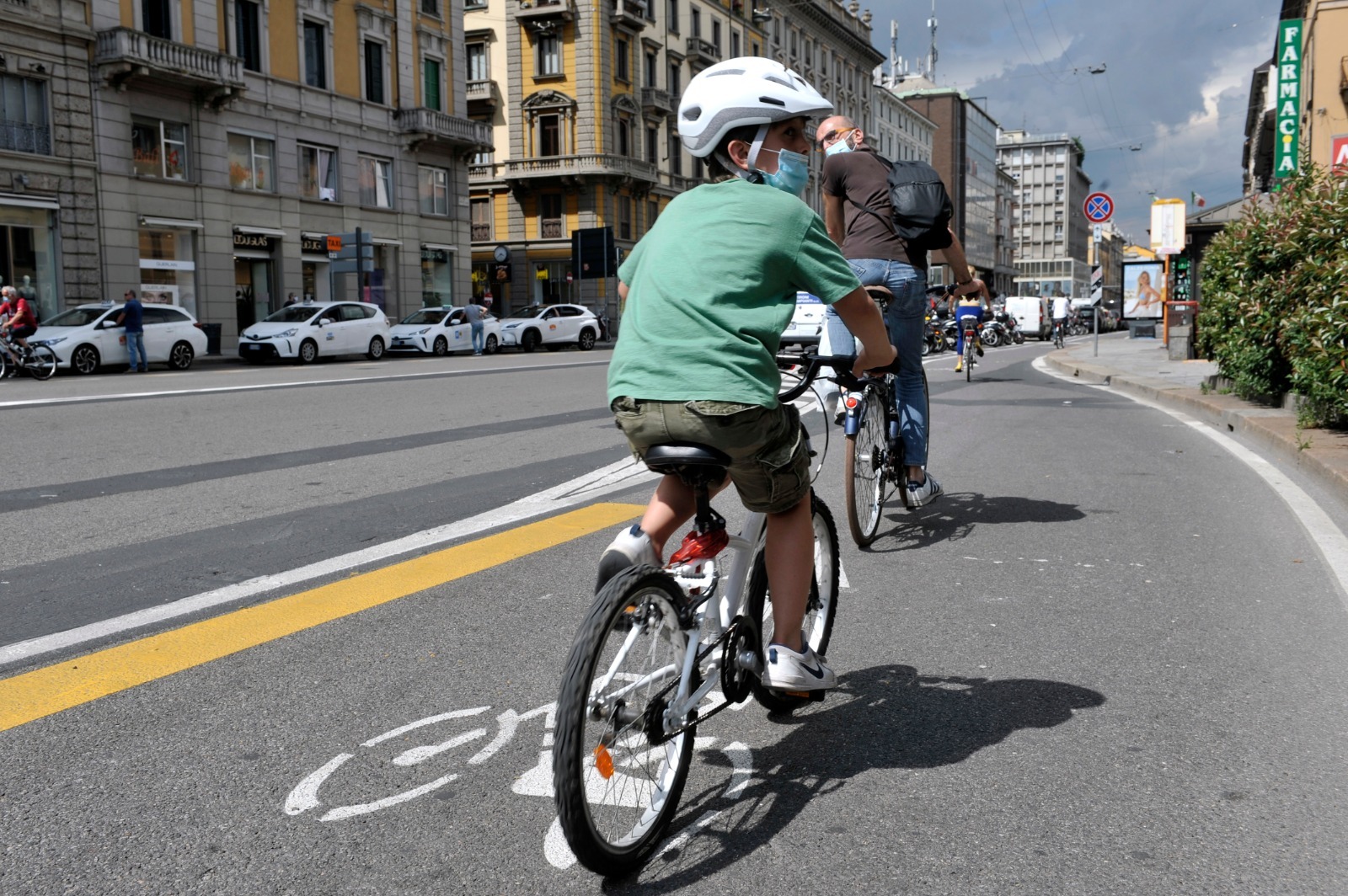
From the onset of the COVID-19 pandemic to its global spread, the crisis has had negative impacts on individuals, communities, and societies, particularly on the most vulnerable people in the Global South. As a result, subnational governments in provinces, cities, districts, and communities find themselves on the front line of coping with the pandemic and its lasting impacts. In the process, they are generating compelling stories of human innovation, adaptation, and resilience.

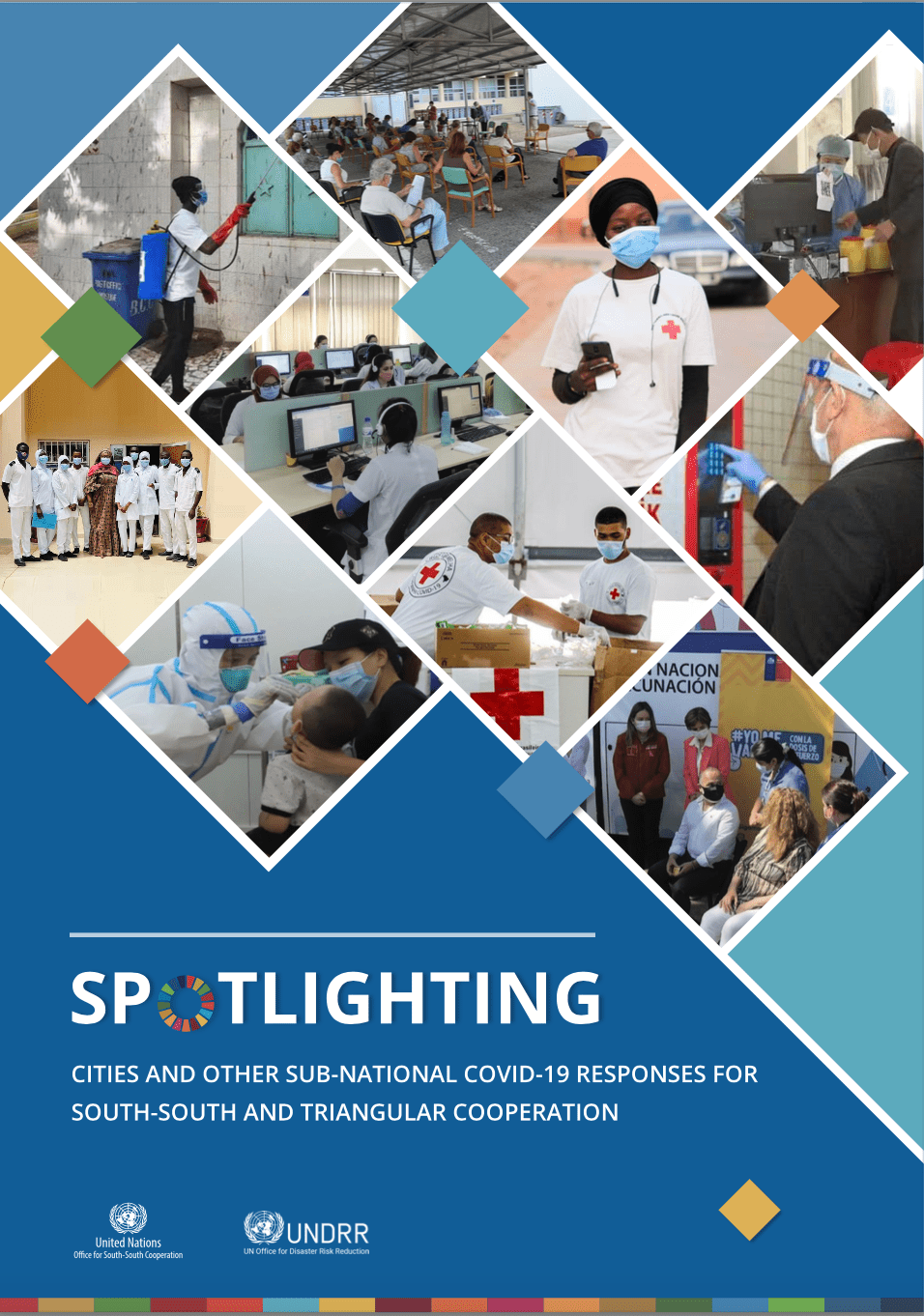
“SPOTLIGHTING: Cities and Other Sub-National COVID-19 Responses for South-South and Triangular Cooperation” is the result of a collaboration between the United Nations Office for South-South Cooperation (UNOSSC) under its South-South Cities Project framework, and the United Nations Office for Disaster and Risk Reduction (UNDRR), with the support of the Pan American Health Organization (PAHO)/World Health Organization (WHO).

This interagency collaboration started with a series of certified online training courses focusing on making cities resilient through South-South cooperation.
Download PDF

Watch the promo video

The online training courses brought together representatives from national health authorities and local governments, as well as technical experts from PAHO/WHO and UNDRR to share the experiences, good practices, and measures adopted in their cities and local contexts in disaster risk reduction and COVID-19 response. The first set of training took place between September-October 2020 and was attended by over 2,500 participants from 150 countries and territories. The online training courses brought together representatives from national health authorities and local governments, as well as technical experts from PAHO/WHO and UNDRR to share the experiences, good practices, and measures adopted in their cities and local contexts in disaster risk reduction and COVID-19 response.

Building on the successful results of the first training in 2020, UNOSSC, UNDRR/GETI and the World Health Organization (WHO)’s Health Emergencies Programme jointly organized the second training series for local authorities and urban development practitioners in June 2021, entitled “Build Back Better: Harnessing South-South Cooperation and Risk Reduction Planning for Resilient and Healthy Cities in the Post-COVID-19 era”. Overall, the 2021 training received over 5000 registrations from 165 countries and territories, and 2979 participants joined the sessions live from over 1000 cities in 155 countries and territories with close to equal gender participation.
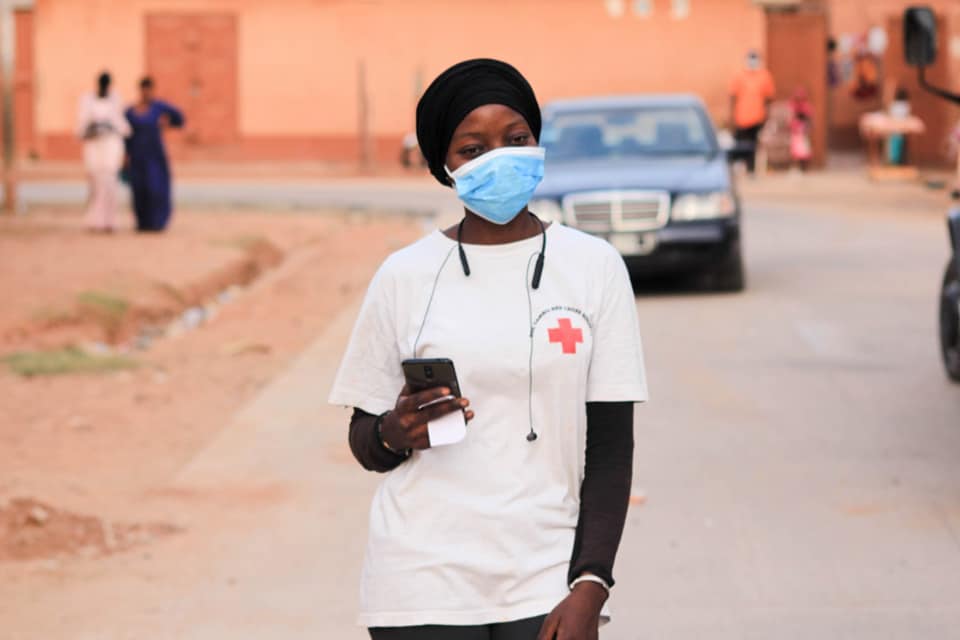
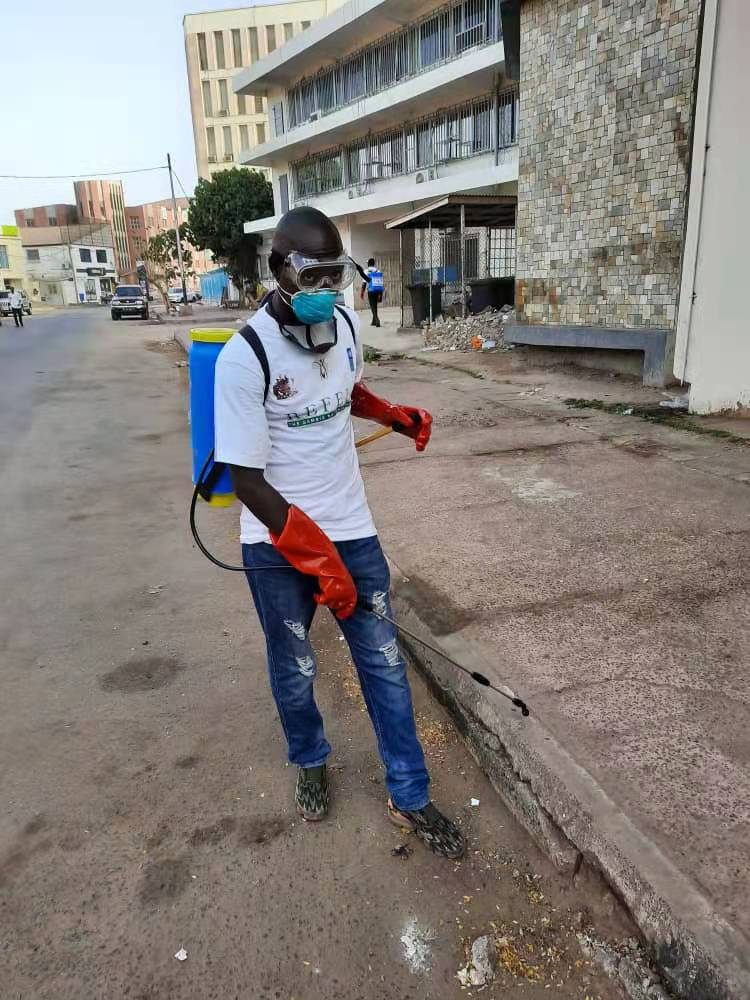
Owing to the success of the interagency training initiative and the partnership, the three United Nations system entities decided to organize a call for voluntary submissions to consolidate a knowledge product that would capitalize on good practices of cities and localities as well as lessons learned in their COVID-19 responses.

The present publication is a knowledge product on the experiences of provinces, cities, districts, and communities of the global South responding to the COVID-19 pandemic. It showcases the evidence-based, collaborative strategies that various localities have adopted to respond to the COVID-19 pandemic and deal with its broader economic and social consequences. It is aimed at health, emergency response, and development policymakers and practitioners at various levels (regional, national, provincial, municipal, and local) in the Global South and beyond.

The report includes 10 cases from localities in Africa, Asia and the Pacific, Europe and Central Asia, Latin America, and the Caribbean: Baguio (the Philippines), Bangladesh (64 districts), Banjul (the Gambia), Chaco Province (Argentina), Fujian Province and Cha-ting Community in Nanjing Province (China), Izmir Province (Turkey), Santiago Metropolitan Region (Chile), São Paulo (Brazil), Udine, Milan and Potenza Province (Italy).

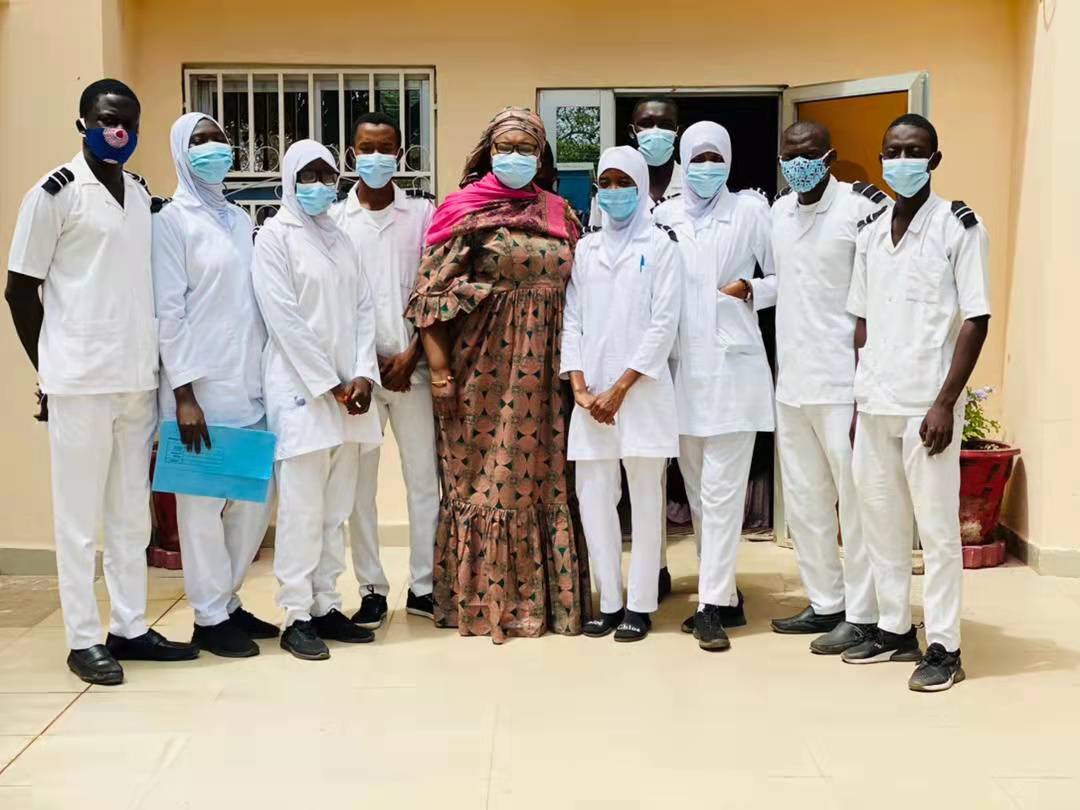
The experiences in the report cover a wide range of topics, including diverse strategies for public health emergency response, especially those involving digital technologies and direct support to vulnerable populations, women, children, elderly populations, and youth.

It is a knowledge product to help advance the exchange of replicable and adaptable practices and knowledge-sharing between local authorities and experts and to promote understanding of the different challenges, solutions, approaches, and sectoral strategies being undertaken in the Global South.
Connect with UNOSSC

Stay updated with the latest trends in South-South cooperation and access our vast repository of knowledge.

Copyright © UNOSSC/UNDP

Register

Registration Form (INDIVIDUAL EXPERT)

Use this form to register as an individual expert and become discoverable for knowledge exchange, advisory services, technical support, mentorship, and South-South and triangular cooperation initiatives.

SECTION A. PERSONAL INFORMATION

First name *
Last Name *
Image
Maximum file size: 1 GB
Country of Residence: *
Current Organization/Institution (if applicable):
Position/Title:
Email *
LinkedIn/Professional Profile (optional):
Short professional biography *
CV
Maximum file size: 1 GB

SECTION B. EXPERTISE PROFILE

SDGs
Specific Expertise / Keywords (max. 10 keywords, separate with , ):
Experience in Regions
Experience in Countries

SECTION C. TYPE OF SUPPORT YOU CAN PROVIDE

I am available to provide: (Select all that apply)

SECTION D. PRO-BONO EXPERT SUPPORT

Would you be willing to provide pro bono support to governments, development organizations, UN entities, academia, civil society organizations, or other stakeholders through the platform?

SECTION E. MODALITIES & AVAILABILITY

Mode of support:
Estimated availability:
Indicative level of effort (optional):
SECTION F. SHORT DESCRIPTION OF SUPPORT OFFER (Max. 500 characters)

SECTION G. CONSENT & CONDITIONS

I would like my profile to be: *
Consent: *

1. Official name of organization / institution / government entity (exclusions to apply) *
Organizational Logo *
Maximum file size: 2 MB
2. Country *
3. Region *
4. SDGs *
5. Partner category *
6. Website *
7. Which is your Parent organization?
8. Indicate which unit/project/department you work in at your organization. *
9.Industry / sector of your organization *
10. Brief description of your institution (max. 150 words) *
11. Name for the Lead *
12. Title for the Lead *
13. Email address for the Lead *
14. Name for the co-lead
15. Title for the co-lead
16. Email address for the co-lead
17. Due Diligence and Integrity Declaration *

Registration Form (INDIVIDUAL EXPERT)

Use this form to register as an individual expert and become discoverable for knowledge exchange, advisory services, technical support, mentorship, and South-South and triangular cooperation initiatives.

SECTION A. PERSONAL INFORMATION

First name *
Last Name *
Image
Maximum file size: 1 GB
Nationality:
Country of Residence: *
Current Organization/Institution (if applicable):
Position/Title:
Email *
LinkedIn/Professional Profile (optional):
Short professional biography *
CV
Maximum file size: 1 GB

SECTION B. EXPERTISE PROFILE

SDGs
Specific Expertise / Keywords (max. 10 keywords, separate with , ):
Experience in Regions
Experience in Countries

SECTION C. TYPE OF SUPPORT YOU CAN PROVIDE

I am available to provide: (Select all that apply)

SECTION E. MODALITIES & AVAILABILITY

Mode of support:
Estimated availability:
Indicative level of effort (optional):
SECTION F. SHORT DESCRIPTION OF SUPPORT OFFER (Max. 500 characters)

SECTION G. CONSENT & CONDITIONS

I would like my profile to be: *
Consent: *

1. Official name of organization / institution / government entity (exclusions to apply) *
Organization logo
Maximum file size: 20 MB
2. Country *
3. Region *
4. SDG *
5. Partner category *
6. Website *
7. Brief description of your institution (max. 150 words) *
8. Name for the Lead *
9. Title for the Lead *
10. Email address for the Lead *
11. Name for the co-lead
12. Title for the co-lead
13. Email address for the co-lead
14. Expression of Interest in the Alliance *
Additional information on proposed areas of engagement may be requested through the platform following initial review by the Alliance Secretariat.
15. Due Diligence and Integrity Declaration *

Submission Note:

  • Submission of this Expression of Interest form does not automatically confer participation in the Alliance.
  • All submissions will be reviewed by the Alliance Secretariat, including basic eligibility screening and proportionate due diligence, as appropriate.
  • Participation in Alliance activities is determined based on relevance to articulated cooperation needs, alignment with Alliance principles, and integrity considerations.
  • Engagement under the Alliance is voluntary, non-binding, and facilitative in nature, and does not constitute funding approval, contractual commitment, or institutional membership.
  • The Alliance Secretariat may contact submitting entities for additional information or clarification during the review process.

Submission of Demand Form

Description of Demand

Indicate the type of support or cooperation requested through the Alliance.
Please briefly describe the challenge, gap, or priority. (Max. 300 words)

Thematic and Geographic Focus

Please indicate the main focus areas of your demand:

A. Thematic Areas (select up to three)
B. Geographic Focus (select all that apply)

Proposed Engagement Modalities

Please indicate how you would like to engage through the Alliance (select all that apply):

Expected Outcomes

Please indicate the main results you seek to achieve through this engagement. (Max. 200 words)
Examples:
• Capacity strengthened
• Partnerships established
• Sectoral or regional strategies co-developed
• Solutions piloted
• Knowledge generated
• Policies informed

Timeline and Readiness (if applicable)

1. Expected timeframe for engagement:
2. Current stage:

Additional Information

Please provide any additional information, documents, or links relevant to this submission.
(Max. 200 words or upload link)

Submission of Offer Form

Description of Contribution

Indicate the type of contribution your institution can provide and describe the expertise, resources, or solutions you may offer.
Please briefly describe your proposed contribution. (Max. 300 words)

Thematic and Geographic Focus

Please indicate the main focus areas of your interest:

A. Thematic Areas (select up to three)
B. Geographic Focus (select all that apply)

Proposed Engagement Modalities

Please indicate how you would like to engage through the Alliance (select all that apply):

Expected Outcomes

Please indicate the main results you aim to achieve through this engagement. (Max. 200 words)
Examples:
• Capacity strengthened
• Partnerships established
• Sectoral or regional strategies co-developed
• Solutions piloted
• Knowledge generated
• Policies informed

Timeline and Readiness (if applicable)

1. Expected timeframe for engagement:
2. Current stage:

Additional Information

Please provide any additional information, documents, or links relevant to this submission.
(Max. 200 words or upload link)

Organization Registration

Authentication & Due Diligence This prototype simulates identity verification, due diligence confirmation, and an authentication step before submission. *

First Name *
Last Name *
Email address *
Password *
Confirm Password *
Name of institution / organization *
Country / Region *
Organization Type *
Organization other *
Function / role *
Organization logo *
Maximum file size: 1 GB

Login

Login / email *
Password *
Remember me

Forgot password?

Connect form

Your name *
Email *
Organization / institution *
Job title / role *
Reason for connecting:
Short message

Add Knowledge Product

A. Publication Basics (Mandatory)

Exact Title of the Publication *
Featured image *
Maximum file size: 2 MB
Executive Summary *
Publication Available Online *
Direct Link to Publication

B. Publication Details

Subtitle
Publication Type *
Year of Publication *
Authors / Editors
Key Messages

C. Organizations

Partner Organizations

D. Discoverability (Optional)

Keywords *
SDGs *
Geographic Coverage *
Countries *

Add Good Practice

My form is: *

SECTION 1. BASIC INFORMATION

Title of the Good Practice *
A South-South cooperation good practice is a documented experience, approach, methodology or initiative that has produced positive results, generated useful lessons, and demonstrated relevance for other countries or institutions facing similar development challenges. A good practice should be credible, evidence-based, contextually explained, and useful for learning, policy dialogue, adaptation or scaling.
Name of the Solution(s) *
A South-South cooperation solution is a concrete, tested or implementable policy, programme, technology, institutional model, service, financing mechanism, methodology or partnership approach developed or applied by countries and institutions of the Global South, which responds to a clearly identified development challenge and has potential to be adapted, replicated or scaled in other contexts through South-South or triangular cooperation.
Short Summary *
max. 60 words
Lead Implementing Institution *
Partner Institutions *
Countries / Territories Involved *
Regions Involved *
Type of Cooperation *

SECTION 2. DEVELOPMENT CONTEXT & SDG ALIGNMENT

Primary SDG(s) Addressed *
SDG Target(s) *
Secondary SDGs (if applicable)
Development Challenge Addressed *
100–150 words

SECTION 3. DESCRIPTION OF THE GOOD PRACTICE & SOLUTION

Objectives of the Good Practice / Solution *
max. 100 words
Description of the Solution(s) *
max. 300 words
Innovation Dimension *
max. 150 words

SECTION 4. SOUTH-SOUTH & TRIANGULAR COOPERATION VALUE

South-South Knowledge Exchange *
max. 200 words
Role of Triangular Partners (if applicable)

SECTION 5. PARTICIPATION & GOVERNANCE

Were participatory approaches used in the design and implementation of the solution? If yes, describe the stakeholders involved (e.g., beneficiaries, communities, civil society, private sector, government agencies) *
max. 150 words
What governance and institutional arrangements supported the implementation of this solution? Please describe the roles and responsibilities of key institutions and any collaboration with government entities, development partners, civil society, academia, or the private sector *

SECTION 6. PRODUCED IMPACT (Partner-Validated)

Description of Produced Impact *
max. 250 words
Quantitative Results *
Please provide measurable results achieved through the solution.
Quantitative Results
Please provide measurable results achieved through the solution.
Qualitative Results *
Please describe the most significant qualitative changes resulting from the solution.
Qualitative Results
Please describe the most significant qualitative changes resulting from the solution.

Timeframe of Impact

Timeframe of Impact of the solution: *

SECTION 7. SUSTAINABILITY & SCALABILITY

7.1 What measures have been taken to ensure the sustainability of the good practice beyond the project or intervention period? *
Please describe institutional, financial, policy, technical, community ownership, or capacity-building measures that support long-term sustainability. (max. 150 words)
7.2 Is the solution replicable and adaptable in other contexts? *
Please explain whether the solution can be adapted or replicated in different countries, regions, sectors, communities, or development settings. Highlight any enabling conditions or prerequisites. (max. 150 words)

SECTION 8. RISKS & LESSONS LEARNED

Key Risks and Mitigation Measures
max. 100 words
Lessons Learned *
max. 150 words

SECTION 9. RESOURCES & EVIDENCE

Supporting Materials *
Maximum file size: 1 GB
manuals, toolkits, evaluations, media
URL of the Good Practice / Solution *
Please provide URLs to publicly available resources that demonstrate, validate, or document the good practice. Examples include: Project or programme website/microsite, published evaluation report, case study, knowledge product, policy document, news article or media coverage, technical report, blog or publication etc.
URL of the Solution *
Please provide URLs to publicly available resources that demonstrate, validate, or document the solution. Examples include: Project or programme website/microsite, published evaluation report, case study, knowledge product, policy document, news article or media coverage, technical report, blog or publication etc.
Additional URLs (optional)

SECTION 10. CONTACT INFORMATION & VALIDATION

Focal Point – Partner Institution (Impact Validation)

Name *
Title *
Organization *
Email *
Declaration *

Scroll to Top