• Home
  • /
  • Publications
  • /
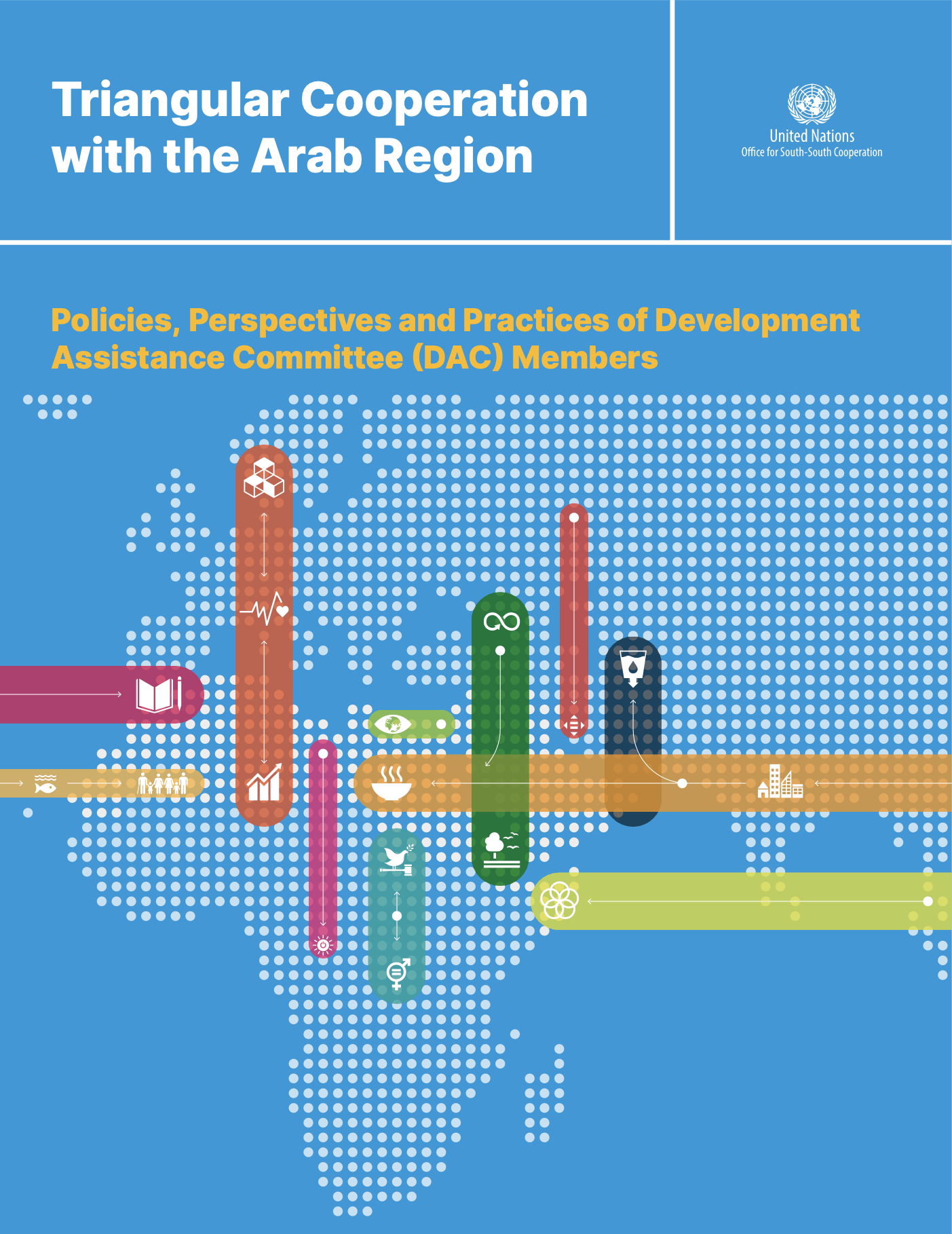
  • Triangular Cooperation with the Arab Region: Policies, Perspectives and Practices of DAC Members

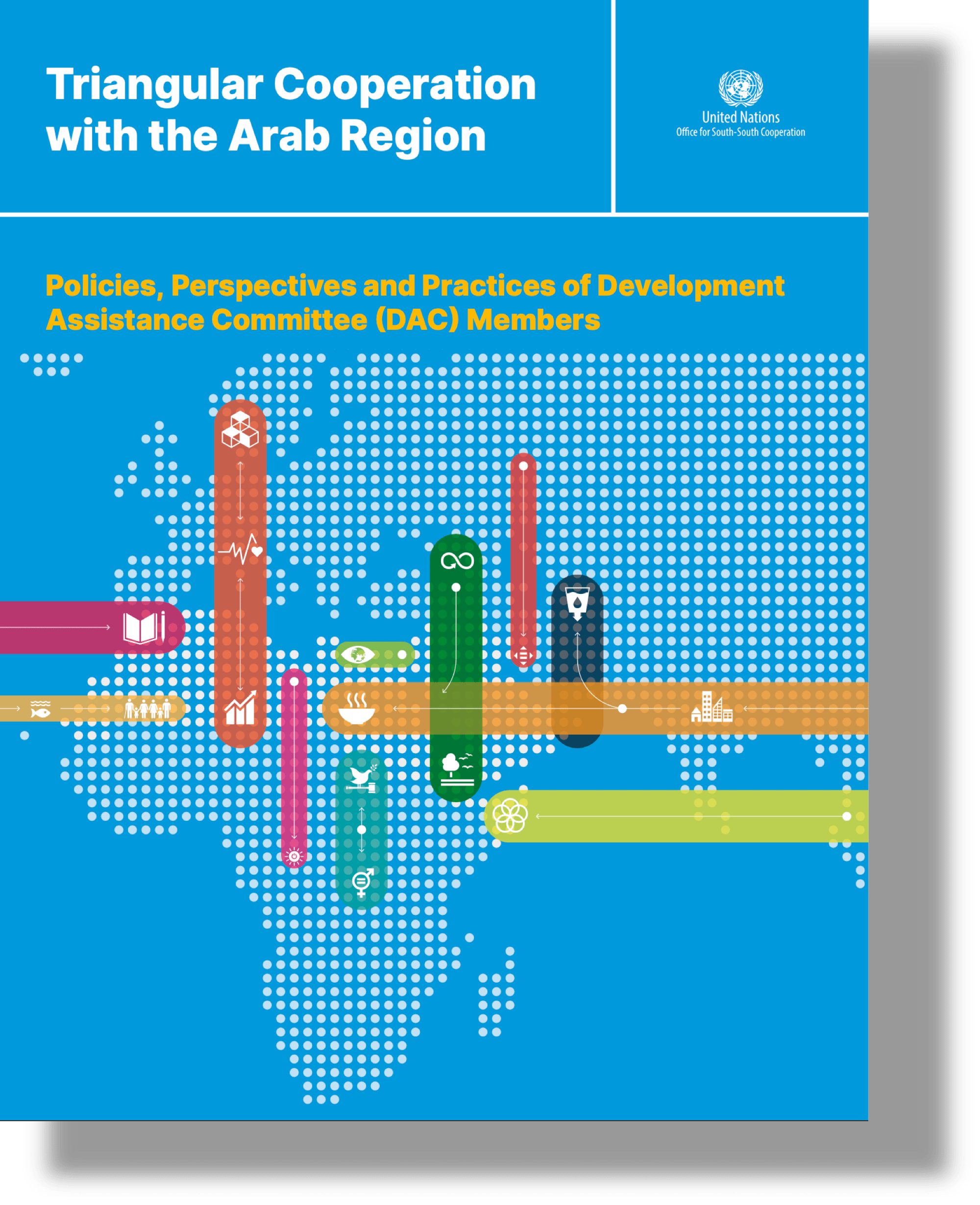
Triangular Cooperation with the Arab Region: Policies, Perspectives and Practices of DAC Members


Complex, intractable, and persistent development challenges worldwide disproportionately affect the lives of millions in the South. It has become increasingly evident that despite political will and national ownership, developing countries can not tackle these challenges independently. Among other factors, they require resources and know-how provided through revamped knowledge-partnerships that transcend boundaries.

The COVID-19 pandemic response demonstrated how countries, through international solidarity and coordinated action, can generate transformative change at a scale and speed previously unimaginable. It also highlighted the necessity for context-specific development approaches and broader partnerships to assist governments and national institutions in finding the best-fitting solutions for their local needs. In this context, triangular cooperation is gaining recognition as an essential modality in the evolving development cooperation architecture, complementing South-South cooperation.
Download PDF

As articulated in the Outcome Document of the second High-Level United Nations Conference on South-South Cooperation in 2019 (BAPA+40), triangular cooperation “provides added value by leveraging and mobilizing additional technical and financial resources, sharing a broader range of experiences, promoting new areas of cooperation, and combining affordable and context-based development solutions under flexible arrangements and agreed shared modalities.“ The document also urged Member States to “increase the use“ of this modality under the leadership of the beneficiary country. However, due to the diversity of approaches, interpretations, policy frameworks, as well as institutional and part- nership arrangements, the BAPA+40 Outcome Document acknowledged “the need to better understand trian- gular cooperation and provide more evidence and rigorous information on its scale, scope, and impact.“

Against this backdrop, UNOSSC commissioned this study to contribute to ongoing and future policy discussions and partnership arrangements at all levels. Initiated in response to interest expressed by Arab states, the study examines the policies, perspectives, and practices of Development Assistance Committee (DAC) members at the Organisation for Economic Cooperation and Development (OECD) concerning triangular cooperation, followed by a focus on DAC member engagement with the Arab region. Among other findings, the study reveals that although no consensus exists on the definition of triangular cooperation, many Arab states are actively engaged in this form of cooperation with DAC members, with some exclusively serving as pivotal partners. These Arab partners have relevant domestic experience in addressing issues similar to those of beneficiary countries and share their financial resources, knowledge, and expertise.

The study will contribute to strengthening the knowledge base on triangular cooperation and thus take up the BAPA+40 call for more evidence on the modality. Beyond its immediate focus on DAC members and Arab states, the study will also be of interest to regional institutions, UN entities, and other stakeholders seeking to explore and/or leverage this form of cooperation as they continue to address development challenges.
Connect with UNOSSC

Stay updated with the latest trends in South-South cooperation and access our vast repository of knowledge.

Copyright © UNOSSC/UNDP

Alliance Application Form

Submit an Expression of Interest and/or Demand Signal. UNOSSC reviews submissions on a rolling basis.

1. Official name of organization / institution / government entity (exclusions to apply) *
Organization logo
Maximum file size: 20 MB
2. Country *
3. Region *
4. SDG *
5. Partner category *
6. Website *
7. Brief description of your institution (max. 150 words) *
Name for the Lead *
Title for the Lead *
Email address for the Lead *
Name for the co-lead
Title for the co-lead
Email address for the co-lead
Section 3. Expression of Interest in the Alliance *
Additional information on proposed areas of engagement may be requested through the platform following initial review by the Alliance Secretariat.
Section 4. Due Diligence and Integrity Declaration *

Submission Note:

  • Submission of this Expression of Interest form does not automatically confer participation in the Alliance.
  • All submissions will be reviewed by the Alliance Secretariat, including basic eligibility screening and proportionate due diligence, as appropriate.
  • Participation in Alliance activities is determined based on relevance to articulated cooperation needs, alignment with Alliance principles, and integrity considerations.
  • Engagement under the Alliance is voluntary, non-binding, and facilitative in nature, and does not constitute funding approval, contractual commitment, or institutional membership.
  • The Alliance Secretariat may contact submitting entities for additional information or clarification during the review process.

Submission of Demand Form

Description of Demand

Indicate the type of support or cooperation requested through the Alliance.
Please briefly describe the challenge, gap, or priority. (Max. 300 words)

Thematic and Geographic Focus

Please indicate the main focus areas of your demand:

A. Thematic Areas (select up to three)
B. Geographic Focus (select all that apply)

Proposed Engagement Modalities

Please indicate how you would like to engage through the Alliance (select all that apply):

Expected Outcomes

Please indicate the main results you seek to achieve through this engagement. (Max. 200 words)
Examples:
• Capacity strengthened
• Partnerships established
• Sectoral or regional strategies co-developed
• Solutions piloted
• Knowledge generated
• Policies informed

Timeline and Readiness (if applicable)

1. Expected timeframe for engagement:
2. Current stage:

Additional Information

Please provide any additional information, documents, or links relevant to this submission.
(Max. 200 words or upload link)

Submission of Offer Form

Description of Contribution

Indicate the type of contribution your institution can provide and describe the expertise, resources, or solutions you may offer.
Please briefly describe your proposed contribution. (Max. 300 words)

Thematic and Geographic Focus

Please indicate the main focus areas of your interest:

A. Thematic Areas (select up to three)
B. Geographic Focus (select all that apply)

Proposed Engagement Modalities

Please indicate how you would like to engage through the Alliance (select all that apply):

Expected Outcomes

Please indicate the main results you aim to achieve through this engagement. (Max. 200 words)
Examples:
• Capacity strengthened
• Partnerships established
• Sectoral or regional strategies co-developed
• Solutions piloted
• Knowledge generated
• Policies informed

Timeline and Readiness (if applicable)

1. Expected timeframe for engagement:
2. Current stage:

Additional Information

Please provide any additional information, documents, or links relevant to this submission.
(Max. 200 words or upload link)

Organization Registration

Authentication & Due Diligence This prototype simulates identity verification, due diligence confirmation, and an authentication step before submission. *

First Name *
Last Name *
Email address *
Password *
Confirm Password *
Name of institution / organization *
Country / Region *
Organization Type *
Organization other *
Function / role *
Organization logo *
Maximum file size: 1 GB

Login

Login / email *
Password *
Remember me

Forgot password?

Connect form

Your name *
Email *
Organization / institution *
Job title / role *
Reason for connecting:
Short message

Scroll to Top