 Recognizing and Redoubling the Impact of 30 Years of Grassroots Women’s Groups’ Organizing to Realize the Beijing Platform for Action, SDG 5, and Build Economically Just and Resilient Communities: A Call to Action
The Beijing Platform for Action (BPfA)
Recognizing and Redoubling the Impact of 30 Years of Grassroots Women’s Groups’ Organizing to Realize the Beijing Platform for Action, SDG 5, and Build Economically Just and Resilient Communities: A Call to Action
The Beijing Platform for Action (BPfA) was adopted at a time of hope when democratic and human rights institutions were being strengthened; social movements were strong, supported and resourced; and trust in global institutions, multilateralism and the United Nations was high.” This year marks its 30th anniversary amid economic uncertainty and a shifting geopolitical landscape, with growing demands for a new era of multilateralism.
Various reports feeding into the
Beijing+30 Review noted uneven progress and persistent challenges. The
synthesis report prepared by UNWomen raised that:
- 10% of women and girls remain in extreme poverty
- women still have only 64% of legal rights of men
- proportion of women with Internet access still low at 65%
- 2 billion women and girls still have no social protection
- half of the world’s women and girls face conflict-related sexual violence
- women still carry 2.5X more unpaid care work than men
- only 4% of aid goes to programmes with gender equality as main objective
The
call to action at CSW69 includes greater attention to the reality on the ground for women in the Global South, for context-specific prioritization and responses, and for greater solidarity among and for women across the North and South.
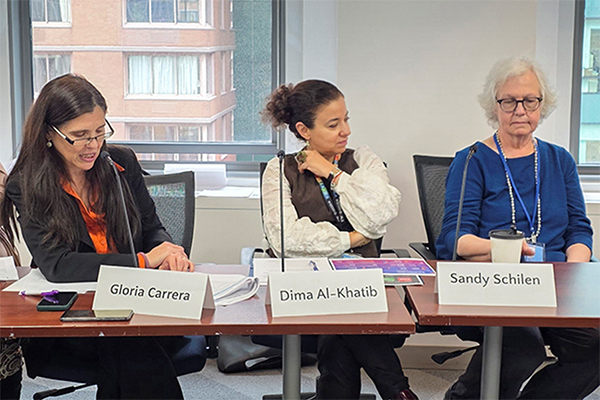
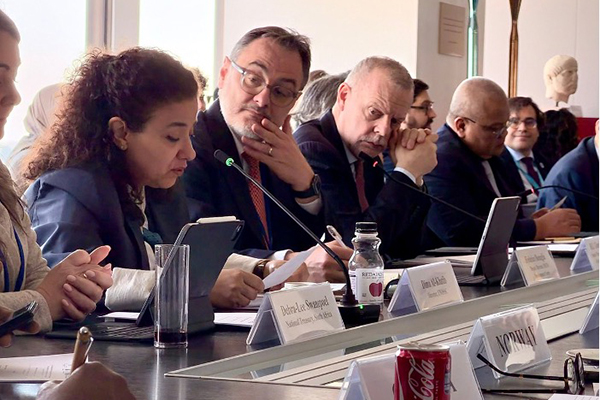
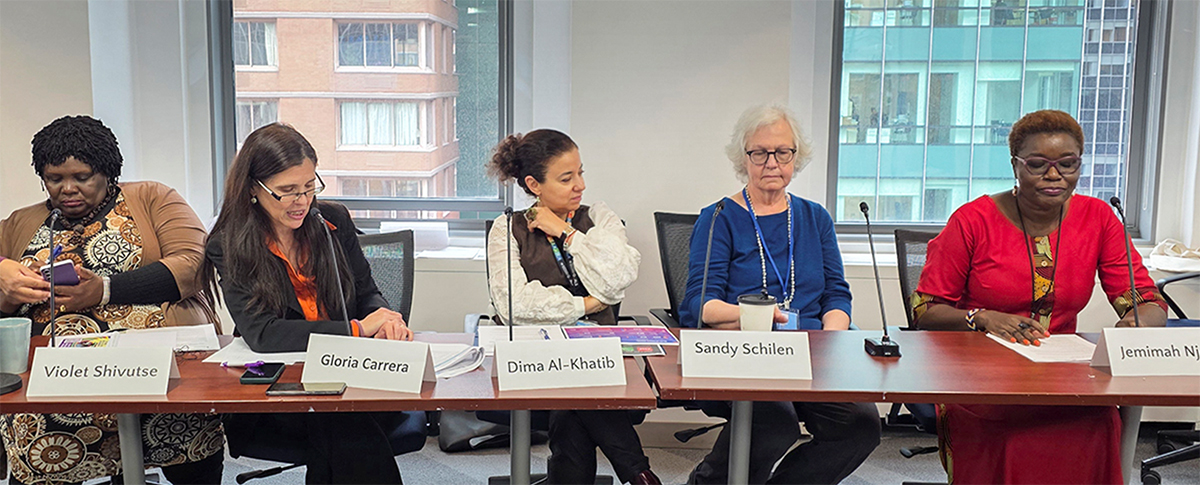
At a roundtable discussion during CSW69 with
UNWomen,
Huairou Commission, Oxfam and Spain, UNOSSC Director Dima Al-Khatib highlighted that the global community needs to more effectively leverage all available assets, knowledge, tools, and resources in responding to this call, with a particular focus on women at the “frontlines” – the women at the grassroots. Strengthening the linkages between
Beijing+30 and
BAPA+40 at the regional and grassroots level will help move goals and aspirations forward, she said.
The
Second High-level United Nations Conference on South-South Cooperation, or BAPA+40 was a Summit in 2019 where Member States reviewed, reaffirmed and strengthened the Buenos Aires Plan of Action that was adopted in 1978, which elevated the immense potential of South-South and triangular cooperation for achieving development goals.
The trends that accompany Beijing+30 and BAPA+40 recognize
the transformation of the Global South itself: many developing countries have become vibrant, dynamic economies. Emerging economies have deepened their championship of these cooperation modalities and are among the countries behind the
South-South Trust Funds and initiatives that have been entrusted to UNOSSC to manage. In the Arab region, we have seen the rapid growth of economies alongside greater readiness to also support development goals through South-South and triangular cooperation (UAE, Qatar and the Islamic Development Bank are just some of UNOSSC’s new partners as well).
Trends also point to the
transformation of relations among the Global South: global South countries are strengthening platforms for cooperation and mutual support, increasingly becoming each other’s trading partners among others (
South-South trade has surpassed North-South trade in the past decade). Regional integration and cooperation have risen with the view that neighboring countries are better off cooperating on, and best positioned to, address transborder challenges. Also, triangular cooperation with Northern partners has broadened sources of support for Southern-led solutions.
At the core of these trends is the principle of solidarity among countries of the Global South, solidarity that is integral in the cooperation among women’s grassroots organizations. Cooperation among women’s grassroots organizations embodies the model of development cooperation advanced by South-South and triangular cooperation – delivering support that poses no burdens and ensures mutual benefit. Regional and cross-regional South-South and triangular cooperation and can help build capacities through technical exchanges, help elevate priorities and galvanize action more systematically, and broaden the channels for shaping gendered policies and strategies from the global to the local level.
The geographic proximity, shared challenges, and complementary strengths of women’s groups in neighboring countries create natural partnerships that could be leveraged more effectively. Contexts also matter. Solutions rooted in local context and knowledge, shaped by stakeholders who know their own needs best and are informed by what has been tested by peers in similar situations, could also be leveraged more systematically for greater development impact.
EXAMPLES
- Through the India, Brazil and South Africa Facility for Poverty and Hunger Alleviation (IBSA Fund) :
- UNOSSC has supported projects in Guinea-Bissau and The Gambia advancing women’s livelihoods – enhancing literacy, introducing solar energy, and training rural women and youth in agribusiness, entrepreneurship, and cooperative formation.
- In Uganda’s Karamoja subregion, where 45% of the population faces food insecurity and malnutrition rates reach 18% in some areas, a women-led agricultural initiative implemented by UNDP is transforming lives by building capacities of marginalized groups for large-scale commercial farming. Women-led groups have successfully cultivated sorghum, green grams, and sunflowers, securing food for their families while generating income to break the cycle of poverty and hunger.
- A significant and growing component of the IBSA Fund’s portfolio is its contribution to SDG 5, Gender Equality. For instance, the Empowering Rural Women in Fiji – Upscaling of Rocket Stove Project implemented by UNDP, empowered 1,530 women from 56 rural communities with new skills and opportunities for improved livelihoods through the training and production of 1,580 rocket stoves.
- Under the India-UN Development Partnership Fund:
- Supported has been provided to communities in Asia and Latin America to develop gender-responsive curricula, ensuring that educational content promotes equality and challenges stereotypes.
- 16 Caribbean countries are being supported to coordinate on eradication of mother-to-child transmission of infectious diseases. Similarly, in the Kyrgyz Republic, we are helping enhance maternal and neonatal health in remote mountainous areas by equipping five rural maternity hospitals with telemedicine technology and training – improving access to quality reproductive healthcare for rural women.
- UNOSSC is supporting the UNCDF-implemented project in Fiji, Developing Climate Disaster Risk Financing Framework and Parametric Insurance, drawing on India’s expertise in FinTech and InsurTech. In its initial phase, the project enabled about 50,000 women to enroll in parametric insurance despite the remote, low value and disaster-prone location of their agricultural households and businesses. In its second phase, this initiative seeks to benefit 5,000 households, including smallholder farmers, fishers, market vendors, and small businesses.
- UNOSSC is also facilitating a UNDP-implemented project that helps African women to engage in regional trade trade, helping the AfCFTA Secretariat in drafting the AfCTA Protocol on Women and Youth in Trade to empower women-led business participation.
For further information please contact: Ms. Minerva Novero-Belec, Regional Policy Specialist, UNOSSC
Review and appraisal of the implementation of the Beijing Declaration and Platform for Action and the outcomes of the twenty-third special session of the General Assembly, Report of the Secretary-General (E/CN.6/2025/3)
https://ssg.undp.org.rs/south-south-cooperation-advancing-rights-equality-and-empowerment-for-all-women-and-girls/
https://ssg.undp.org.rs/advancing-womens-empowerment-through-south-south-cooperation/
https://ssg.undp.org.rs/india-un-fund-reducing-maternal-and-neonatal-mortality-in-kyrgyzstan-with-telemedicine/
https://ssg.undp.org.rs/parametric-insurance-funds/
South-South and Triangular Cooperation | Data Futures Exchange