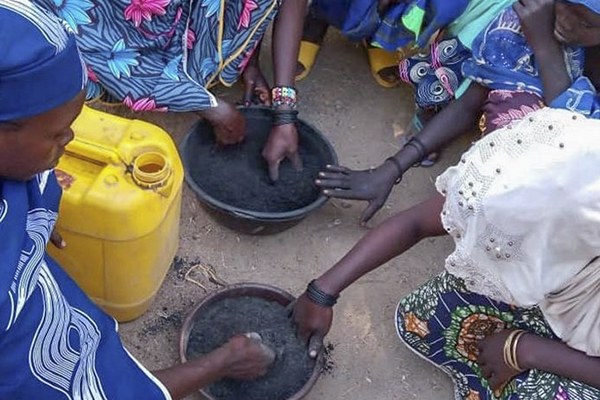
Cameroon’s Solar Mamas Light the Way


https://www.youtube.com/watch?v=0U-han4oJOw&ab_channel=UNSouth-SouthCooperation

“Power cuts are common in this town and can last for four hours,” says Evelyn, who sells barbecued fish every evening in Maroua in the North of Cameroon.

This doesn’t just mean that residents have to use battery-powered lights to go about their daily lives. The lack of power reduces educational opportunities, connectivity to benefit from outside information and networks, and ultimately impacts standards of living, health and well-being.

Can you imagine living in a community that has never experienced electricity-produced light? There are several villages like that around here.”

? Babah, one of Evelyn’s customers.

There are, in fact, hundreds of villages in the surrounding area that have never known any kind of electricity.

In the whole country, only 63 percent of households have access to the electricity grid. This decreases sharply in the far northern regions, where only 10–22 percent are connected.

Imagine that: no electricity for your lights, your stove, your radio, your phones, your washing machine, your TV. What would you use instead?

If you were a Cameroonian living in the northern regions of the country, you would probably look for the nearest alternative . . . the surrounding forests, from which people extract fuelwood to meet more than 95 percent of their energy needs. The resulting deforestation, however, leads to its own set of problems, including global heating, soil erosion and reduced fertility, landslides, flash floods and increased likelihood of pests and diseases of crops owing to a lack of habitat for birds, bats and insects that attack agricultural invaders.

But there is hope for a brighter future. Communities off the electricity grid in Cameroon’s North and Extreme North regions have been benefiting from renewable energy solutions as part of UNESCO’s Scaling-Up Rural Households’ Use of Renewable Energy and Energy-Efficient Technologies project.
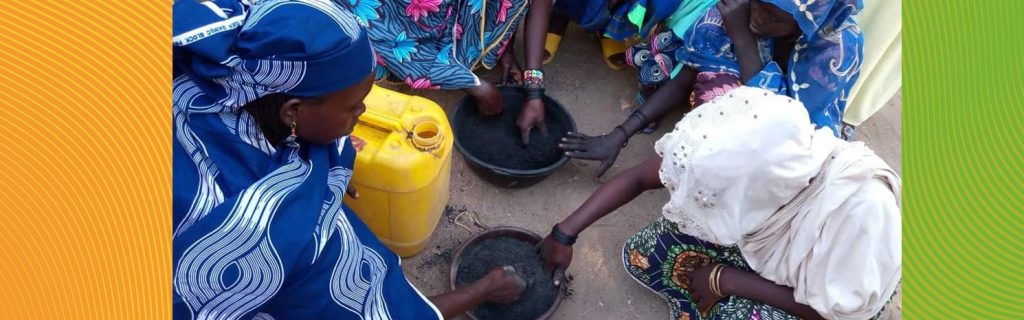
Zina women preparing eco-friendly charcoal

The project is funded by the India-UN Development Partnership Fund, managed by the United Nations Office of South-South Cooperation. It includes a partnership with India’s Social Work and Research Centre, widely known as the Barefoot College. Five illiterate women from three rural villages in northern Cameroon underwent a four-month training at the Dakar, Senegal campus of the College to learn both about the technology and to pass this knowledge onto others upon their return to their villages. These Solar Mamas will also maintain and repair the photovoltaic solar systems and train others in their use.


This great example of South–South Cooperation, whereby developing countries share knowledge, skills, expertise and resources to meet their development goals, has advised that each partnering community forms a village solar committee, the members of which are trained to manage the community’s solar energy project.


Besides selecting the Solar Mamas that received training, the committee hosts a rural electronic workshop, oversees budgeting, and ensures community engagement to care for, budget and plan for management and upkeeping of the systems.


The project takes a comprehensive approach toward enhancing people’s livelihoods and ensuring sustainability. The project team introduced the community to various environmentally friendly energy sources, ranging from the highly technological to the artisanal, namely, photovoltaic solar equipment to be installed in public buildings, efficient cook stoves produced with local material, and biodigesters for biogas and biomass production. Through the introduction of these renewable energy systems, the project also benefits community members, leaders and government officials, including 6,000 women and youth.


The local University of Maroua, in cooperation with the communities, designed and constructed three demonstration sites that host the project activities. Each site has a biodigester, ecological briquette production and improved cooking stoves.


These sites provide practical and experiential training to villagers. To date, more than 1,000 households in the northern towns of Bibemi, Poli and Zina have visited and participated in their learning activities.
The project was launched in April 2021 by the Government of Cameroon, UNESCO, the Indian High Commissioner to Cameroon, and representatives of the communities.

These two locales [North and the Far North] experience the ill effects of low access to electrical power because just 20% of families have access to electrical power.”

? Salah Khaled, UNESCO’s Director for Central Africa.

The over-reliance on non-environmentally friendly sources of power, such as firewood and charcoal from the forests, has led to increasing deforestation and threatened ecosystems in the region, making them more vulnerable to the impact of climate change, with a corresponding kick-on effect on the communities involved, creating a vicious cycle.

“Cameroon is facing a very serious problem of energy deficiency and this gets worse in the northern part of Cameroon. So this project enables us to use our natural energy potential, which is the sun. Renewable energy is at the heart of most development projects, justifying why the education sector is also supporting this project.”

? Mohamadou Alidou of the National Advanced School of Engineering of Maroua.


For more information please contact Ms. Ines Tofalo, Trust Fund and Project Management Specialist at UNOSSC: ines.tofalo@unoscc.org

More India-UN Fund Stories


Related Post


  • All Post
  • ATCT Featured Publications POM
  • BAPA+40
  • Blog
  • Capacity Development Initiatives
  • CICETE Featured Publications POM
  • CIKD
  • Cities Clusters - Agriculture
  • Cities Clusters - COVID-19
  • Cities Clusters - COVID-19 Knowledge Products
  • Cities Clusters - DRR
  • Cities Clusters - E-commerce
  • Cities Clusters - Tourism
  • Cities Clusters - Tourism Knowledge Products
  • Cities Clusters - Transport
  • Cities Clusters - Waste
  • Cities Project
  • Cities Project COVID-19 Newsletters
  • Cities Project COVID-19 Response
  • Cities Project Knowledge Products
  • Classic (untouched)
  • Climate Action
  • COMSATS Featured Publications POM
  • COMSATS Featured Solutions POM
  • Converted from Divi
  • Converted from Mixed
  • Converted from WPBakery
  • COVID-19
  • COVID-19 Page Featured Solutions
  • DRR Knowledge Products
  • DRR News
  • Empty Post
  • Events
  • Featured Event UN-Habitat POM
  • Financing for Development
  • Financing Mechanisms
  • g7+
  • Gender Events
  • Gender News
  • Good Practices in SSTrC Series
  • Good Practices Publications
  • Good Practices Thematic Series & Special Editions
  • Good Practices Vol. 2
  • Good Practices Vol. 3
  • GSSDC
  • Highlighted
  • Highlighted Publications
  • IAEA Featured Solutions POM
  • IBRAF Featured Publications POM
  • IBSA Fund
  • IBSA Fund Annual Reports
  • IBSA Fund News and Stories
  • IBSA Fund Publication
  • IBSA Fund Story
  • ICGEB Featured Events POM
  • ICGEB Featured Publications POM
  • ICGEB Featured Solutions POM
  • ILO Featured Events POM
  • ILO Featured Publications POM
  • ILO Featured Solutions POM
  • India-UN Development Partnership Fund
  • India-UN Fund Publication
  • India-UN Fund Story
  • IsDB
  • IsDB Featured Publications POM
  • IsDB SCC
  • News
  • Norec Featured Publications POM
  • Norec Featured Solutions POM
  • Peace and Development
  • PGTF Publications
  • PGTF Story
  • PICA Featured News POM
  • PICA Featured Publications POM
  • PICA Featured Solutions POM
  • PIDF Featured Publications POM
  • Publications
  • Regional Updates
  • Research
  • ROK-UNOSSC Facility
  • SGP Featured Publication POM
  • SGP Featured Solutions POM
  • Solution
  • South South in Action
  • South-South Global Thinkers
  • South-South Ideas
  • South-South Ideas Series
  • South-South in Action Series
  • Southern Response to COVID-19
  • SSN4PSI Featured Publications POM
  • SSN4PSI Featured Solutions POM
  • Training
  • UN Day for SSC 2020
  • UN Fund for SSC
  • UN SSC Day Publications
  • UN-Habitat Featured Publications POM
  • UN-HABITAT Featured Solutions POM
  • UNCCT
  • UNEP Featured Publications POM
  • UNFPA
  • UNFSSC Publication
  • UNFSSC Story
  • UNIDO Featured Publications POM
  • UNIDO Featured Solutions POM
  • UNIDO POM Events
  • UNOCT Featured Publications POM
  • UNV
  • UNV Featured Publications POM
  • WB Featured Publications POM
  • WB Featured Solutions POM
  • Webinars
  • WFP Featured Events POM
  • WFP Featured Publication POM
  • WFP Featured Solutions POM
  • WIPO
  • Workshops and Seminars
  • Youth4South
  • z Across the Globe 1
  • z Across the Globe 2
  • z Across the Globe 4
  • z Across the Globe 5
  • z Across the Globe 6
  • z Across the Globe 7
  • z Across the Globe 8
  • z ES BAPA+40
  • z ES Eventos
  • z ES Noticias
  • z ES Noticias Destacadas
  • z ES Publicaciones
  • z ES Publicaciones Destacadas
  • z ES Serie Buenas Prácticas en la CSSyT
  • z ES Serie El Sur-Sur en Acción
  • z FR Actualités
  • z FR BAPA+40
  • z FR Événements
  • z FR Publications
  • z FR Publications en vedette
  • z FR Série Bonnes pratiques en CSST
  • z FR Série Sud-Sud en action
  • z Highlighted News
  • z Photos
  • z Videos
  • z ZH BAPA+40
  • z ZH Events
  • z ZH News

ABOUT

Terms of Service

Privacy Policy

Disclosures

RESOURCES

Terms of Service

Privacy Policy

Disclosures

ENGAGE

Terms of Service

Privacy Policy

Disclosures

Copyright © UNOSSC/UNDP

wpChatIcon
wpChatIcon

Alliance Application Form

Submit an Expression of Interest and/or Demand Signal. UNOSSC reviews submissions on a rolling basis.

1. Official name of organization / institution / government entity (exclusions to apply) *
2. Country *
3. Region *
4. SDG *
Secondary SDG *
5. Partner category *
6. Website *
7. Brief description of your institution (max. 150 words) *
Name for the Lead *
Title for the Lead *
Email address for the Lead *
Name for the co-lead
Title for the co-lead
Email address for the co-lead
Section 3. Expression of Interest in the Alliance *
Additional information on proposed areas of engagement may be requested through the platform following initial review by the Alliance Secretariat.
Section 4. Due Diligence and Integrity Declaration *

Submission Note:

  • Submission of this Expression of Interest form does not automatically confer participation in the Alliance.
  • All submissions will be reviewed by the Alliance Secretariat, including basic eligibility screening and proportionate due diligence, as appropriate.
  • Participation in Alliance activities is determined based on relevance to articulated cooperation needs, alignment with Alliance principles, and integrity considerations.
  • Engagement under the Alliance is voluntary, non-binding, and facilitative in nature, and does not constitute funding approval, contractual commitment, or institutional membership.
  • The Alliance Secretariat may contact submitting entities for additional information or clarification during the review process.

Submission of Demand Form

Description of Demand

Indicate the type of support or cooperation requested through the Alliance.
Please briefly describe the challenge, gap, or priority. (Max. 300 words)

Thematic and Geographic Focus

Please indicate the main focus areas of your demand:

A. Thematic Areas (select up to three)
B. Geographic Focus (select all that apply)

Proposed Engagement Modalities

Please indicate how you would like to engage through the Alliance (select all that apply):

Expected Outcomes

Please indicate the main results you seek to achieve through this engagement. (Max. 200 words)
Examples:
• Capacity strengthened
• Partnerships established
• Sectoral or regional strategies co-developed
• Solutions piloted
• Knowledge generated
• Policies informed

Timeline and Readiness (if applicable)

1. Expected timeframe for engagement:
2. Current stage:

Additional Information

Please provide any additional information, documents, or links relevant to this submission.
(Max. 200 words or upload link)

Submission of Offer Form

Description of Contribution

Indicate the type of contribution your institution can provide and describe the expertise, resources, or solutions you may offer.
Please briefly describe your proposed contribution. (Max. 300 words)

Thematic and Geographic Focus

Please indicate the main focus areas of your interest:

A. Thematic Areas (select up to three)
B. Geographic Focus (select all that apply)

Proposed Engagement Modalities

Please indicate how you would like to engage through the Alliance (select all that apply):

Expected Outcomes

Please indicate the main results you aim to achieve through this engagement. (Max. 200 words)
Examples:
• Capacity strengthened
• Partnerships established
• Sectoral or regional strategies co-developed
• Solutions piloted
• Knowledge generated
• Policies informed

Timeline and Readiness (if applicable)

1. Expected timeframe for engagement:
2. Current stage:

Additional Information

Please provide any additional information, documents, or links relevant to this submission.
(Max. 200 words or upload link)

Organization Registration

Authentication & Due Diligence This prototype simulates identity verification, due diligence confirmation, and an authentication step before submission. *

First Name *
Last Name *
Email address *
Password *
Confirm Password *
Name of institution / organization *
Country / Region *
Organization Type *
Organization other *
Function / role *
Organization logo *
Maximum file size: 1 GB

Login

Login / email *
Password *
Remember me

Forgot password?

Connect form

Your name *
Email *
Organization / institution *
Job title / role *
Reason for connecting:
Short message

Scroll to Top