• Home
  • /
  • COVID-19
  • /
  • Webinar: Building Resilient Societies post-COVID-19 in the Global South

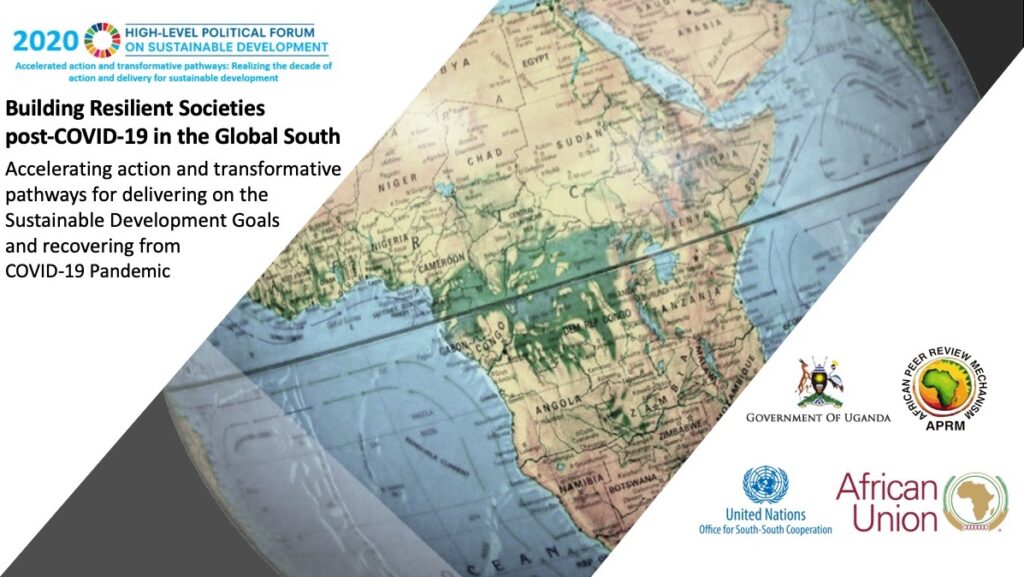
Webinar: Building Resilient Societies post-COVID-19 in the Global South


  • When: 16 July 2020, 8-9am EST / 2-3pm Johannesburg Time.
  • To join this webinar, please click here.

The United Nations Office for South-South Cooperation,  the African Peer Review Mechanism, the Permanent Mission of Uganda to the United Nations and the African Union, are co-organizing this webinar on Building Resilient Societies post-COVID-19 in the Global South, to be held during the 2020 High Level Political Forum on Sustainable Development.

Background
In a short span of time, COVID-19 has shaken countries and diminished economic activities on a scale that is reminiscent of the 2008 global financial crisis. Forced to adjust its relatively upbeat economic forecast issued earlier this year, the International Monetary Fund (IMF) already declared that the world will enter a recession as a result of COVID-19. Despite lockdowns, curfews, and other measures to curb its spread, the number of infections has passed the 10 million mark worldwide. The death toll has exceeded 500,000. In light of this extraordinarily challenging situation, ‘’resilience’’ is probably one of the most consulted terms in efforts to mitigate the COVID-19 impact and to rethink how countries of the South can rebuild stronger economies and societies in the mid and long terms.

COVID-19 and its negative impact on the Global South

The Global South with its limited health systems-hospital capacities including the ratio of doctors/inhabitants, available medicines and vital medical equipment such as ventilators and personal protective equipment is undoubtedly going to be immensely tested by a highly contagious virus which was characterized as a pandemic by the World Health Organization (WHO) on 11 March 2020. While saving lives should receive most of the focus of governments, due consideration needs to be given to resuscitating economies to cushion the impact of COVID-19. In addition to regular hygiene keeping, social distancing has been recommended as the best way to keep COVID-19 at bay short of a vaccine whose potential development, licensing, and ultimately authorized commercialization is at least a year away.

However, social distancing is a luxury in the global South where numerous individuals rely on the informal economy for their income and sustenance.  The need for people to remain indoors to stave off COVID-19 will have a significant impact on food security as jobs are lost, and social protection is absent or very inadequate. Governments need to make sure that a health crisis does not turn into a food crisis and supply chains are not disrupted.

Several assessments of the damage that COVID-19 will cause have been made in the global South. According to the least bad projection, 122.8 million African people will suffer from contaminations, 2.3 million admissions to the hospital, and 300,000 deaths. On the African continent, between 5 and 29 million people could find themselves in extreme poverty, and 19 million jobs could be lost.

The way forward

In an economic environment marked by uncertainty and a certain sense of parochialism, the Global South ought to adopt resilience as an overarching policy. It is critical and possible to attenuate economic shocks while holding out for economic assistance and the cancellation of debt owed to International Financial Institutions. A paradigm shift needs to operate in the way in which the Global South devises its economic plans. Integrating the full scope of resilience as a concept- preparing for a crisis, mitigating its consequences, and adapting to new circumstances – will be paramount for reviving capital markets and flows, protecting the most vulnerable and developing a robust pipeline for post-crisis investments.

An organization can be seen as resilient when ‘’it can respond effectively to and withstand crises by managing any adverse impacts that might threaten its viability’’ (Drachal, 2017). COVID-19 will leave a lasting impact on the way we transact and live. In the future, it will be crucial to diversify economies and support their digitalization. Accelerating industrialization, increasing knowledge, and expanding trade among countries in the Global South becomes inevitable, given that the pandemic hit the developed world earlier. At present, the value of trade between African countries, for example, is below 20%, leaving the continent particularly vulnerable to possible economic downturn in China, the United States, and Europe, its biggest trading partners.

Medical diplomacy is a concept that has regained popularity amid the COVID-19 outbreak, as seen in Italy, the most affected European country. The fast spread of COVID-19 has made it clear that no country will be able to overcome COVID-19 alone. As the developed world approves large stimulus packages to protect businesses, the Global South is compelled to explore ways to increase solidarity and cooperation, which will set a standard for the world and for future health or humanitarian emergencies.

In the Buenos Aires outcome document of the second High-level United Nations Conference on South-South Cooperation ( A/RES/73/291) adopted in April 2019, the importance of South-South regional and interregional cooperation and triangular cooperation through innovative approaches for collective actions and multi-stakeholder partnerships, towards the achievement of the 2030 Agenda for Sustainable Development, have been highlighted.

Objectives of the side event

In collaboration with the UNOSSC, this joint event aims to bring together countries from Africa and other regions to discuss the following:

  • National responses to COVID-19 and its impact on economies of the Global South while concentrating on a humanitarian response to the crisis.
  • Encouraging the sharing of best practices in mitigating the pandemic,
  • Interrogating the role of governments and the private sector, evaluating the economic fallout from COVID-19 and analyzing the sustainability of national healthcare systems and resilient societies.
  • The need to bolster and leverage partnerships within the Global South, now more than ever, to face down an invisible but powerful foe.
  • Novel approaches to economic production and digitalization, supply chains, and trade relations are urgently needed. Building resilient economies that have the capacity to foresee and lessen turbulence and adapt to new trends is a task that policymakers would do well to embark on.

Agenda

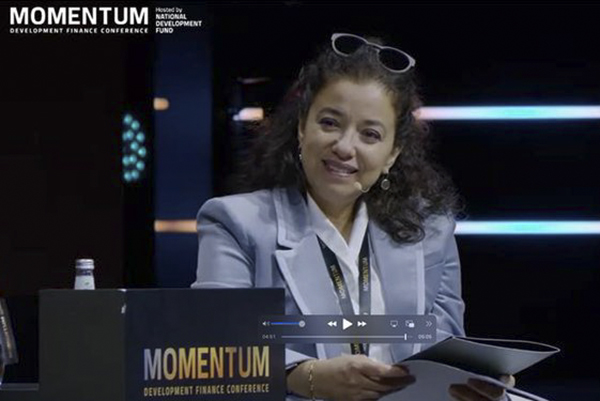
1- Welcoming remarks by Prof. Eddy Maloka, CEO, APRM, and Signing of Memorandum of Understanding between APRM and UNOSSC 2- Keynote Speech by Hon. Dr. Hala El-Said, Minister of Planning and Economic Development, Egypt 3- Global South and the response to the pandemic
  • Mr. Jorge Chediek, Director, UNOSSC and Envoy of the United Nations Secretary-General on South-South Cooperation
4- Significance of South-South Cooperation in COVID-19 times
  • H.E. Dr. Adonia Ayebare, Ambassador, Permanent Representative of Uganda to the United Nations and President of the High-level Committee on South-South Cooperation
5- National experiences in curbing the pandemic in uncertain times
  • Mr. Tshediso Matona, Director General, Department of Planning, Monitoring and Evaluation, South Africa
  • Ms. Angela Ospina de Nicholls, Director General, Presidential Agency for Cooperation, Colombia
  •  Mr. Tomoya Yoshida, Deputy Director General, Human Development Department, Japan International Cooperation Agency
6- Q&A Session and closing remarks by Mr. Tarik Iziraren, Deputy Director for Policy and Strategic Partnerships, UNOSSC

Related Post


  • All Post
  • ATCT Featured Publications POM
  • BAPA+40
  • Blog
  • Capacity Development Initiatives
  • CICETE Featured Publications POM
  • CIKD
  • Cities Clusters - Agriculture
  • Cities Clusters - COVID-19
  • Cities Clusters - COVID-19 Knowledge Products
  • Cities Clusters - DRR
  • Cities Clusters - E-commerce
  • Cities Clusters - Tourism
  • Cities Clusters - Tourism Knowledge Products
  • Cities Clusters - Transport
  • Cities Clusters - Waste
  • Cities Project
  • Cities Project COVID-19 Newsletters
  • Cities Project COVID-19 Response
  • Cities Project Knowledge Products
  • Classic (untouched)
  • Climate Action
  • COMSATS Featured Publications POM
  • COMSATS Featured Solutions POM
  • Converted from Divi
  • Converted from Mixed
  • Converted from WPBakery
  • COVID-19
  • COVID-19 Page Featured Solutions
  • DRR Knowledge Products
  • DRR News
  • Empty Post
  • Events
  • Featured Event UN-Habitat POM
  • Financing for Development
  • Financing Mechanisms
  • g7+
  • Gender Events
  • Gender News
  • Good Practices in SSTrC Series
  • Good Practices Publications
  • Good Practices Thematic Series & Special Editions
  • Good Practices Vol. 2
  • Good Practices Vol. 3
  • GSSDC
  • Highlighted
  • Highlighted Publications
  • IAEA Featured Solutions POM
  • IBRAF Featured Publications POM
  • IBSA Fund
  • IBSA Fund Annual Reports
  • IBSA Fund News and Stories
  • IBSA Fund Publication
  • IBSA Fund Story
  • ICGEB Featured Events POM
  • ICGEB Featured Publications POM
  • ICGEB Featured Solutions POM
  • ILO Featured Events POM
  • ILO Featured Publications POM
  • ILO Featured Solutions POM
  • India-UN Development Partnership Fund
  • India-UN Fund Publication
  • India-UN Fund Story
  • IsDB
  • IsDB Featured Publications POM
  • IsDB SCC
  • News
  • Norec Featured Publications POM
  • Norec Featured Solutions POM
  • Peace and Development
  • PGTF Publications
  • PGTF Story
  • PICA Featured News POM
  • PICA Featured Publications POM
  • PICA Featured Solutions POM
  • PIDF Featured Publications POM
  • Publications
  • Regional Updates
  • Research
  • ROK-UNOSSC Facility
  • SGP Featured Publication POM
  • SGP Featured Solutions POM
  • Solution
  • South South in Action
  • South-South Global Thinkers
  • South-South Ideas
  • South-South Ideas Series
  • South-South in Action Series
  • Southern Response to COVID-19
  • SSN4PSI Featured Publications POM
  • SSN4PSI Featured Solutions POM
  • Training
  • UN Day for SSC 2020
  • UN Fund for SSC
  • UN SSC Day Publications
  • UN-Habitat Featured Publications POM
  • UN-HABITAT Featured Solutions POM
  • UNCCT
  • UNEP Featured Publications POM
  • UNFPA
  • UNFSSC Publication
  • UNFSSC Story
  • UNIDO Featured Publications POM
  • UNIDO Featured Solutions POM
  • UNIDO POM Events
  • UNOCT Featured Publications POM
  • UNV
  • UNV Featured Publications POM
  • WB Featured Publications POM
  • WB Featured Solutions POM
  • Webinars
  • WFP Featured Events POM
  • WFP Featured Publication POM
  • WFP Featured Solutions POM
  • WIPO
  • Workshops and Seminars
  • Youth4South
  • z Across the Globe 1
  • z Across the Globe 2
  • z Across the Globe 4
  • z Across the Globe 5
  • z Across the Globe 6
  • z Across the Globe 7
  • z Across the Globe 8
  • z ES BAPA+40
  • z ES Eventos
  • z ES Noticias
  • z ES Noticias Destacadas
  • z ES Publicaciones
  • z ES Publicaciones Destacadas
  • z ES Serie Buenas Prácticas en la CSSyT
  • z ES Serie El Sur-Sur en Acción
  • z FR Actualités
  • z FR BAPA+40
  • z FR Événements
  • z FR Publications
  • z FR Publications en vedette
  • z FR Série Bonnes pratiques en CSST
  • z FR Série Sud-Sud en action
  • z Highlighted News
  • z Photos
  • z Videos
  • z ZH BAPA+40
  • z ZH Events
  • z ZH News

ABOUT

Terms of Service

Privacy Policy

Disclosures

RESOURCES

Terms of Service

Privacy Policy

Disclosures

ENGAGE

Terms of Service

Privacy Policy

Disclosures

Copyright © UNOSSC/UNDP

wpChatIcon
wpChatIcon

Alliance Application Form

Submit an Expression of Interest and/or Demand Signal. UNOSSC reviews submissions on a rolling basis.

1. Official name of organization / institution / government entity (exclusions to apply) *
2. Country *
3. Region *
4. SDG *
Secondary SDG *
5. Partner category *
6. Website *
7. Brief description of your institution (max. 150 words) *
Name for the Lead *
Title for the Lead *
Email address for the Lead *
Name for the co-lead
Title for the co-lead
Email address for the co-lead
Section 3. Expression of Interest in the Alliance *
Additional information on proposed areas of engagement may be requested through the platform following initial review by the Alliance Secretariat.
Section 4. Due Diligence and Integrity Declaration *

Submission Note:

  • Submission of this Expression of Interest form does not automatically confer participation in the Alliance.
  • All submissions will be reviewed by the Alliance Secretariat, including basic eligibility screening and proportionate due diligence, as appropriate.
  • Participation in Alliance activities is determined based on relevance to articulated cooperation needs, alignment with Alliance principles, and integrity considerations.
  • Engagement under the Alliance is voluntary, non-binding, and facilitative in nature, and does not constitute funding approval, contractual commitment, or institutional membership.
  • The Alliance Secretariat may contact submitting entities for additional information or clarification during the review process.

Submission of Demand Form

Description of Demand

Indicate the type of support or cooperation requested through the Alliance.
Please briefly describe the challenge, gap, or priority. (Max. 300 words)

Thematic and Geographic Focus

Please indicate the main focus areas of your demand:

A. Thematic Areas (select up to three)
B. Geographic Focus (select all that apply)

Proposed Engagement Modalities

Please indicate how you would like to engage through the Alliance (select all that apply):

Expected Outcomes

Please indicate the main results you seek to achieve through this engagement. (Max. 200 words)
Examples:
• Capacity strengthened
• Partnerships established
• Sectoral or regional strategies co-developed
• Solutions piloted
• Knowledge generated
• Policies informed

Timeline and Readiness (if applicable)

1. Expected timeframe for engagement:
2. Current stage:

Additional Information

Please provide any additional information, documents, or links relevant to this submission.
(Max. 200 words or upload link)

Submission of Offer Form

Description of Contribution

Indicate the type of contribution your institution can provide and describe the expertise, resources, or solutions you may offer.
Please briefly describe your proposed contribution. (Max. 300 words)

Thematic and Geographic Focus

Please indicate the main focus areas of your interest:

A. Thematic Areas (select up to three)
B. Geographic Focus (select all that apply)

Proposed Engagement Modalities

Please indicate how you would like to engage through the Alliance (select all that apply):

Expected Outcomes

Please indicate the main results you aim to achieve through this engagement. (Max. 200 words)
Examples:
• Capacity strengthened
• Partnerships established
• Sectoral or regional strategies co-developed
• Solutions piloted
• Knowledge generated
• Policies informed

Timeline and Readiness (if applicable)

1. Expected timeframe for engagement:
2. Current stage:

Additional Information

Please provide any additional information, documents, or links relevant to this submission.
(Max. 200 words or upload link)

Organization Registration

Authentication & Due Diligence This prototype simulates identity verification, due diligence confirmation, and an authentication step before submission. *

First Name *
Last Name *
Email address *
Password *
Confirm Password *
Name of institution / organization *
Country / Region *
Organization Type *
Organization other *
Function / role *
Organization logo *
Maximum file size: 1 GB

Login

Login / email *
Password *
Remember me

Forgot password?

Connect form

Your name *
Email *
Organization / institution *
Job title / role *
Reason for connecting:
Short message

Scroll to Top